Click and Clone
Poetry by Elaine Equi
March 15, 2011 • 6 x 9 • 136 pages • 978-1-56689-257-5
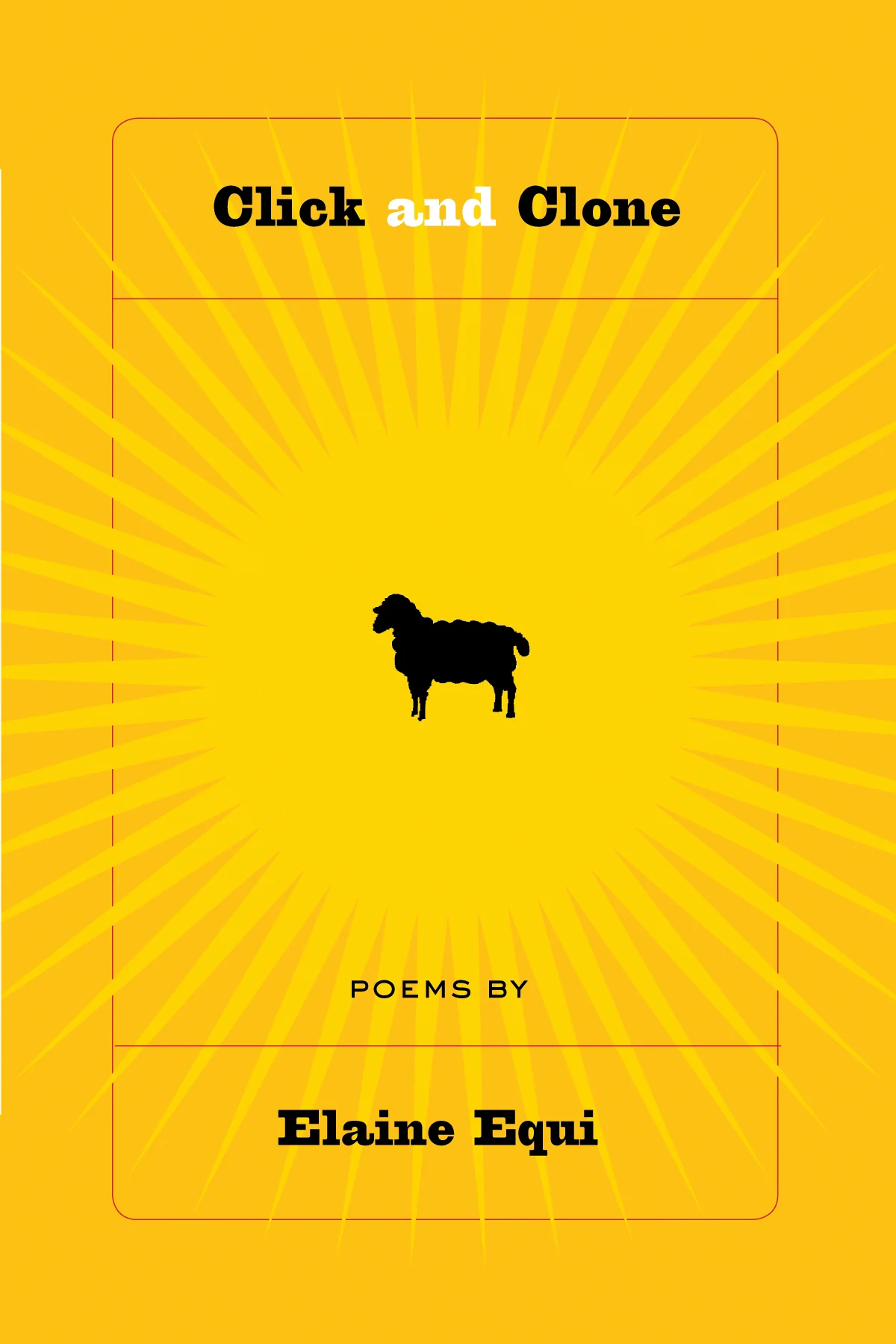
An innovative, whimsical exploration of the effects of technology on everyday life.
Click and Clone explores the tone and timbre of American life as it has been colored by the new metaphors and images brought to us by our continuing technological revolution. Equi is interested in a new form of realism—one that acknowledges the fact that what we think of as normal and everyday is now permeated with the fantastic. These poems draw on the conventions of science fiction and surrealism. Clones, lucid dreaming, and a tarot deck constructed from old movie stills are just a few of the marvelously routine occurrences in this maze of interlocking worlds and poems. Whether she is writing about art, pop culture, consumerism, or reality TV, Equi does so with clarity and wit. As inventive as she is agile, this author is a true original.
About the Author
Elaine Equi, author of Click and Clone, was born in Oak Park, Illinois, and raised in Chicago and its outlying suburbs. In 1988, she moved to New York City with her husband poet Jerome Sala. Over the years, her witty, aphoristic, and innovative work has become nationally and internationally known. Her last book, Ripple Effect: New & Selected Poems, was a finalist for the Los Angeles Times Book Prize and on the short list for Canada’s prestigious Griffin Poetry Prize.
Among her other titles are Surface Tension, Decoy, Voice-Over, which won the San Francisco State University Poetry Center Award, and The Cloud of Knowable Things. Widely published and anthologized, her work has appeared in the New Yorker, Poetry, the American Poetry Review, the Nation, and numerous volumes of the Best American Poetry. She teaches at New York University, and in the MFA Programs at the New School and the City College of New York.
Thanks to a 2013 ADA Access Improvement Grant administered by VSA Minnesota for the Metropolitan Regional Arts Council, this title is also formatted for screen readers which make text accessible to the blind and visually impaired. To purchase this title for use with a screen reader please call (612) 338-0125 or email us at [email protected].
Reviews
“Whether celebrating clones or revising Led Zeppelin (‘That stairway only leads half-way to heaven’), Equi melds verse with aphorism, wisdom with wicked playfulness.” —Entertainment Weekly
“Elaine Equi’s Click and Clone is poetry for the 21st century. . . . Her incisive wit and elegant nod at contemporary technology combine to create a poetry that is not only flamboyant but essential.” —The Journal (West Virginia)
“Thinking and dreaming join forces in Elaine Equi’s poems, to create a voice that merges sharp intelligence with an artfully mined subconscious. Each poem produces a rush, a pleasurable detonation, a whoosh in the head, analogous to all the windows in a skyscraper being thrown or blown open.” —Drunken Boat
“Elaine Equi is one who won’t stay ‘inside the line . . . or outside the line. // I am the line itself,’ she proclaims in the lead poem ‘Follow Me.’ In an age of instant and infinite communication marked by blips, beeps, and tweets, she continues to streamline her unique vision. . . . This troubling topic, seemingly alien to a poetic sensibility, is indicative of Equi’s reach into the future. She also keeps the past magically alive.” —Brooklyn Rail
“Equi’s newest collection is punchy and fast paced; saturated with an urban tang (‘You Know the Type // A NY guy / in an NY hat / walking an NY dog’). Modern yet staunchly accessible in their quirkiness, her poems feel alive. ‘Nowhere is there a poet / who sings the sanitized decadence of our times,’ Equi writes, though one could argue that her collection comes as close as possible.” —Publishers Weekly
“Equi’s name-dropping of fellow poets and friends, her use of various forms—from dialogue script to sonnet to one-line aphoristic phrase—gives this collection an energetic charm.” —American Poet
“Elaine Equi is not a poet’s poet and not a people’s poet, and yet she is both. Her poetry is wry and sparse. Often less than a page, her poems read something like eloquent one-liners that along with laughter effortlessly provoke profundity: a little Wang Wei, a little Frank O’Hara, a little Nicanor Parra, but mostly, just a little.” —Guernica
“Elaine Equi seems to know all our foibles and, instead of edging toward the door, reports the latest developments with precise, loving equanimity. Her voice is unique: poised, witty, intimate, and somehow interstellar. It’s as if she’s visiting from a future where we all appear transparent. Click and Clone is an electrified pleasure field.” —Aram Saroyan
“Spick and span, cut and dry, shake and bake, and now Elaine Equi introduces Click and Clone. These poetically altered texts punch holes into the multiverses of pop and splendor, short and longing, prose and dreams. Equi says that art can no longer imitate life, it just needs to keep up. As they might say at the racetrack, she leads by a verse.” —Charles Bernstein
Product Information
Product Information
Shipping & Returns
Shipping & Returns
Description
Poetry by Elaine Equi
March 15, 2011 • 6 x 9 • 136 pages • 978-1-56689-257-5
An innovative, whimsical exploration of the effects of technology on everyday life.
Click and Clone explores the tone and timbre of American life as it has been colored by the new metaphors and images brought to us by our continuing technological revolution. Equi is interested in a new form of realism—one that acknowledges the fact that what we think of as normal and everyday is now permeated with the fantastic. These poems draw on the conventions of science fiction and surrealism. Clones, lucid dreaming, and a tarot deck constructed from old movie stills are just a few of the marvelously routine occurrences in this maze of interlocking worlds and poems. Whether she is writing about art, pop culture, consumerism, or reality TV, Equi does so with clarity and wit. As inventive as she is agile, this author is a true original.
About the Author
Elaine Equi, author of Click and Clone, was born in Oak Park, Illinois, and raised in Chicago and its outlying suburbs. In 1988, she moved to New York City with her husband poet Jerome Sala. Over the years, her witty, aphoristic, and innovative work has become nationally and internationally known. Her last book, Ripple Effect: New & Selected Poems, was a finalist for the Los Angeles Times Book Prize and on the short list for Canada’s prestigious Griffin Poetry Prize.
Among her other titles are Surface Tension, Decoy, Voice-Over, which won the San Francisco State University Poetry Center Award, and The Cloud of Knowable Things. Widely published and anthologized, her work has appeared in the New Yorker, Poetry, the American Poetry Review, the Nation, and numerous volumes of the Best American Poetry. She teaches at New York University, and in the MFA Programs at the New School and the City College of New York.
Thanks to a 2013 ADA Access Improvement Grant administered by VSA Minnesota for the Metropolitan Regional Arts Council, this title is also formatted for screen readers which make text accessible to the blind and visually impaired. To purchase this title for use with a screen reader please call (612) 338-0125 or email us at [email protected].
Reviews
“Whether celebrating clones or revising Led Zeppelin (‘That stairway only leads half-way to heaven’), Equi melds verse with aphorism, wisdom with wicked playfulness.” —Entertainment Weekly
“Elaine Equi’s Click and Clone is poetry for the 21st century. . . . Her incisive wit and elegant nod at contemporary technology combine to create a poetry that is not only flamboyant but essential.” —The Journal (West Virginia)
“Thinking and dreaming join forces in Elaine Equi’s poems, to create a voice that merges sharp intelligence with an artfully mined subconscious. Each poem produces a rush, a pleasurable detonation, a whoosh in the head, analogous to all the windows in a skyscraper being thrown or blown open.” —Drunken Boat
“Elaine Equi is one who won’t stay ‘inside the line . . . or outside the line. // I am the line itself,’ she proclaims in the lead poem ‘Follow Me.’ In an age of instant and infinite communication marked by blips, beeps, and tweets, she continues to streamline her unique vision. . . . This troubling topic, seemingly alien to a poetic sensibility, is indicative of Equi’s reach into the future. She also keeps the past magically alive.” —Brooklyn Rail
“Equi’s newest collection is punchy and fast paced; saturated with an urban tang (‘You Know the Type // A NY guy / in an NY hat / walking an NY dog’). Modern yet staunchly accessible in their quirkiness, her poems feel alive. ‘Nowhere is there a poet / who sings the sanitized decadence of our times,’ Equi writes, though one could argue that her collection comes as close as possible.” —Publishers Weekly
“Equi’s name-dropping of fellow poets and friends, her use of various forms—from dialogue script to sonnet to one-line aphoristic phrase—gives this collection an energetic charm.” —American Poet
“Elaine Equi is not a poet’s poet and not a people’s poet, and yet she is both. Her poetry is wry and sparse. Often less than a page, her poems read something like eloquent one-liners that along with laughter effortlessly provoke profundity: a little Wang Wei, a little Frank O’Hara, a little Nicanor Parra, but mostly, just a little.” —Guernica
“Elaine Equi seems to know all our foibles and, instead of edging toward the door, reports the latest developments with precise, loving equanimity. Her voice is unique: poised, witty, intimate, and somehow interstellar. It’s as if she’s visiting from a future where we all appear transparent. Click and Clone is an electrified pleasure field.” —Aram Saroyan
“Spick and span, cut and dry, shake and bake, and now Elaine Equi introduces Click and Clone. These poetically altered texts punch holes into the multiverses of pop and splendor, short and longing, prose and dreams. Equi says that art can no longer imitate life, it just needs to keep up. As they might say at the racetrack, she leads by a verse.” —Charles Bernstein