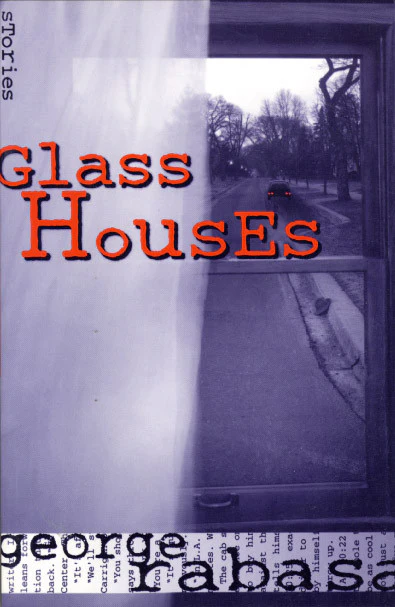
Glass Houses
Stories by George Rabasa
October 1, 1996 • 5.5 x 8.5 • 192 pages • 978-1-56689-051-9
If you can laugh at—or with—Minnesotans, this is your book.
In Glass Houses, George Rabasa offers nineteen stories, generously infused with irony, compassion, and an edgy wit. From the deceptively tranquil lull of a suburban street, to the incessant buzz of a Midwestern city, to the fragility of rural American, this book reveals people we know: our husbands, wives, and children, our neighbors and our co-workers. Here, at last illuminated, are our familiar modern fears: of jobs dissolving, neighborhoods being contaminated, relationships demanding too much or not giving enough, values collapsing, and illusions vanishing. Humorous and unsettling, Glass Houses is a rich collection of stories about the delicate balance of our not-so-private contemporary lives and our ardent attempts to keep the structure sound.
Reviews
“Imagine a stranger, the one you worry about after dark, the one who sneaks up on you and puts a knife in your ribs, the point right at your heart. Imagine looking at your street, and suddenly not recognizing anything—even the stranger wearing your face and clothes, his hand reaching for the knob of the front door you once thought familiar. Imagine, George Rabasa’s worlds—startling, painful, and full of gentle magic.” —Jonis Agee
“Rabasa introduces a delightfully bizarre world and sheds light on it from 19 different angles. Each story is more entertaining than the last, and the overall effect is refreshing. . . . The greatest strength of this collection is its dialogue. Rabasa recreates the subtle misunderstandings of everyday banter, giving each character such a distinct voice that the dialogue could practically stand on its own. . . . These surreal Glass Houses are definitely worth prying into.” —Publishers Weekly
“A fine collections of short stories. . . . What makes Rabasa’s writing so involving? It’s simple: he starts with a simple, common subject, then unfurls an uncommon (twisted?) imagination. . . . I thoroughly enjoyed Rabasa’s first book, and look forward to future publications.” —Bloomsbury Review
Product Information
Product Information
Shipping & Returns
Shipping & Returns
Description
Stories by George Rabasa
October 1, 1996 • 5.5 x 8.5 • 192 pages • 978-1-56689-051-9
If you can laugh at—or with—Minnesotans, this is your book.
In Glass Houses, George Rabasa offers nineteen stories, generously infused with irony, compassion, and an edgy wit. From the deceptively tranquil lull of a suburban street, to the incessant buzz of a Midwestern city, to the fragility of rural American, this book reveals people we know: our husbands, wives, and children, our neighbors and our co-workers. Here, at last illuminated, are our familiar modern fears: of jobs dissolving, neighborhoods being contaminated, relationships demanding too much or not giving enough, values collapsing, and illusions vanishing. Humorous and unsettling, Glass Houses is a rich collection of stories about the delicate balance of our not-so-private contemporary lives and our ardent attempts to keep the structure sound.
Reviews
“Imagine a stranger, the one you worry about after dark, the one who sneaks up on you and puts a knife in your ribs, the point right at your heart. Imagine looking at your street, and suddenly not recognizing anything—even the stranger wearing your face and clothes, his hand reaching for the knob of the front door you once thought familiar. Imagine, George Rabasa’s worlds—startling, painful, and full of gentle magic.” —Jonis Agee
“Rabasa introduces a delightfully bizarre world and sheds light on it from 19 different angles. Each story is more entertaining than the last, and the overall effect is refreshing. . . . The greatest strength of this collection is its dialogue. Rabasa recreates the subtle misunderstandings of everyday banter, giving each character such a distinct voice that the dialogue could practically stand on its own. . . . These surreal Glass Houses are definitely worth prying into.” —Publishers Weekly
“A fine collections of short stories. . . . What makes Rabasa’s writing so involving? It’s simple: he starts with a simple, common subject, then unfurls an uncommon (twisted?) imagination. . . . I thoroughly enjoyed Rabasa’s first book, and look forward to future publications.” —Bloomsbury Review