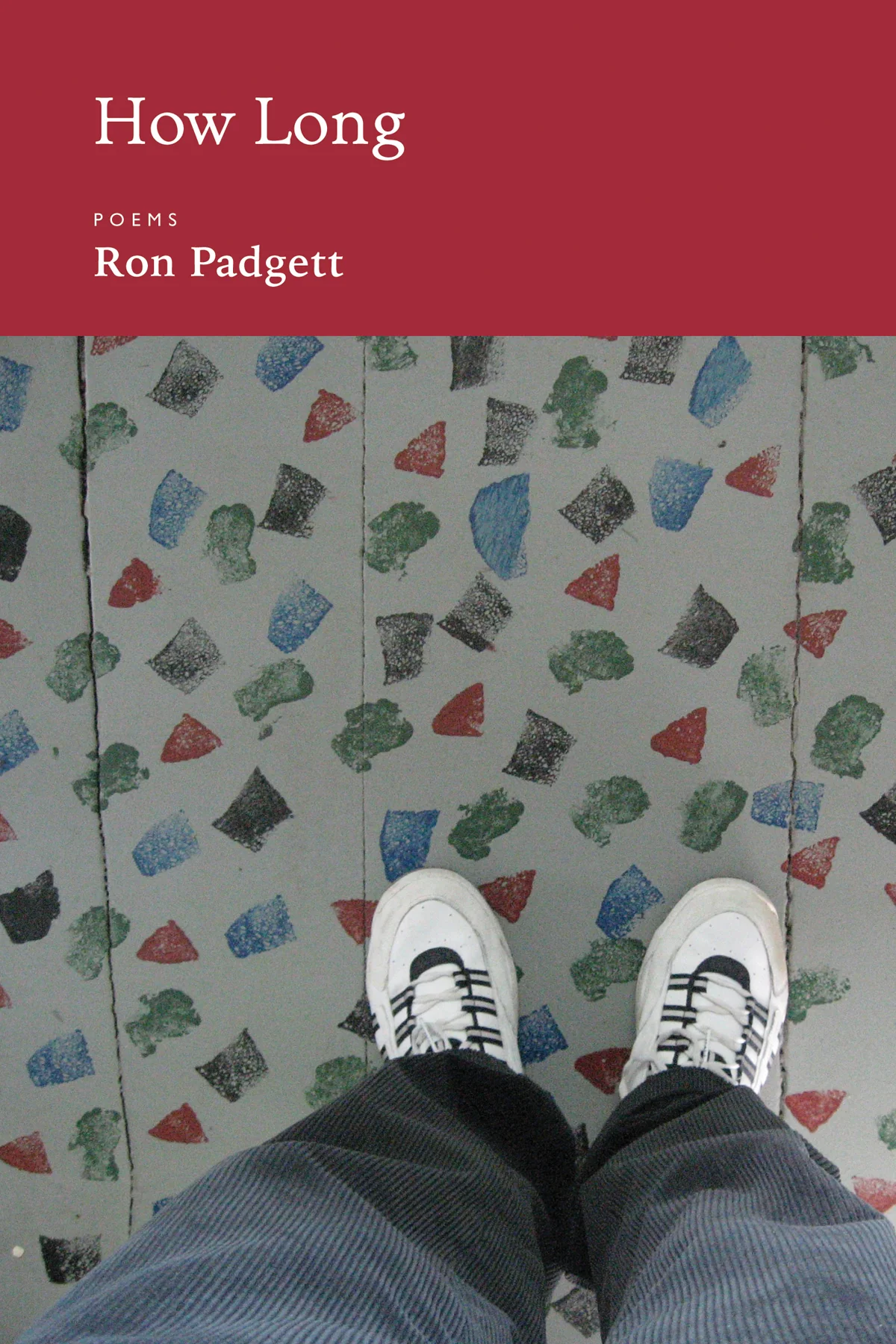
How Long
Poetry by Ron Padgett
March 22, 2011 • 6 x 9 • 216 pages • 978-1-56689-256-8
These witty poems ache to save the world—infusing light, energy, and humor into everyday life.
Padgett’s title poem asks: “How long do you want to go on being the person you think you are? / How Long, a city in China.” With the arrival of his first grandchild, Padgett becomes even more inspired to confront the eternal mysteries with a wry, rueful honesty. This elegiac and witty collection illuminates the world at large and at small—from the Great Wall of China to the radiant details of the everyday—and brings wonder and pleasure with it.
About the Author
Ron Padgett grew up in Tulsa and has lived mostly in New York City since 1960. Among his many honors are a Guggenheim Fellowship, the American Academy of Arts and Letters poetry award, the Shelley Memorial Award, and grants from the National Endowment for the Arts. Padgett’s How Long was Pulitzer Prize finalist in poetry and his Collected Poems won the William Carlos Williams Award from the Poetry Society of America and the Los Angeles Times prize for the best poetry book of 2013. In addition to being a poet, he is also the translator of Guillaume Apollinaire, Pierre Reverdy, and Blaise Cendrars. His own work has been translated into eighteen languages.
Reviews
“Padgett’s sense of romantic joy is undiminished, as is his thoughtfulness about language and the ways in which time changes meaning, and sense can morph into eloquent absurdity.” —Entertainment Weekly
“How Long includes everything—humor and resentment, anger and ardor, pettiness and astonishment. Padgett opens the book’s title poem with the question ‘How long do you want to go on being the person you think you are?’ The poems all taken together seem to respond, ‘As long as it takes.’ And the gift of Padgett’s ease is the sense that within his poetics, if one makes the decision to include everything, to accept and acknowledge without judging, there is no such thing as risk. Within such a view, the world becomes an opportunity, and it is through language, words, the means by which we fashion our community and through which we recognize ourselves, that we can open ourselves to possibility.” —Yale Review
“What sets Padgett apart from other accessible, humorous poets is his willingness to become both difficult and serious when a poem requires it. . . . Padgett’s complexity lies in his ability to depart from a thought as soon as he introduces it (the poem ‘Death,’ for instance, begins, ‘Let’s change the subject’), a strategy of which he is never unconscious: ‘What was I thinking about/ a few minutes ago when/ another thought / swept me away?’ It is these instances, in which Padgett uses his poems to help piece together his recollections, that give this collection its vulnerability and sincerity.” —Publishers Weekly
“Padgett’s genius is to follow his thought no matter where it leads him. He is less concerned with making an old-fashioned shapely poem than he is with the movement of a shapely mind, and in that regard he joins ranks with other poets who have broken new ground. There are plenty of twists, turns, and unexpected moments in Padgett’s work, but this feeling of excitement is exactly why I want to read him. Sometimes his work is straightforward, sometimes it is rollercoaster wild, but he never trades in obscurity.” —Bill Zavatsky
“Reading Padgett one realizes that playfulness and lightness of touch are not at odds with seriousness. . . . As is often the case, leave it to the comic writer to best convey our tragic predicament.” —New York Review of Books
“A Padgett book is always a delight. The humor and wry wisdom that shows up in Ron Padgett poems is forever quirky, often also full of feeling, and nearly always clearly to the point. . . . Here in this book there’s a fresh serious quality to each of the moves he practices; it comes from that coming cliff-edge moment. Death and love, all we’ve got according to one of those old-time guys, are here skipping hand in hand forward as if they’d just met in Miss Frechette’s class and are bouncing the cartoon bubble of imagination in the air between them with the light-hearted gravity of childhood affection.” —Galatea Resurrects
“Padgett’s poems are so playful, self-mocking and eager to please that it would be easy to overlook their craft, not to mention the depth and sincerity of the emotions they convey. What animates How Long is the tension between the buoyancy of its language and the gravity of its subject.” —Washington Post
“Padgett’s poetry drifts from one thought to the next, then circles back on itself, cartwheeling through stanzas and parading through lines, often good-humored even as he discusses the most solemn of adult subjects, death.” —Gently Read Literature
Product Information
Product Information
Shipping & Returns
Shipping & Returns
Description
Poetry by Ron Padgett
March 22, 2011 • 6 x 9 • 216 pages • 978-1-56689-256-8
These witty poems ache to save the world—infusing light, energy, and humor into everyday life.
Padgett’s title poem asks: “How long do you want to go on being the person you think you are? / How Long, a city in China.” With the arrival of his first grandchild, Padgett becomes even more inspired to confront the eternal mysteries with a wry, rueful honesty. This elegiac and witty collection illuminates the world at large and at small—from the Great Wall of China to the radiant details of the everyday—and brings wonder and pleasure with it.
About the Author
Ron Padgett grew up in Tulsa and has lived mostly in New York City since 1960. Among his many honors are a Guggenheim Fellowship, the American Academy of Arts and Letters poetry award, the Shelley Memorial Award, and grants from the National Endowment for the Arts. Padgett’s How Long was Pulitzer Prize finalist in poetry and his Collected Poems won the William Carlos Williams Award from the Poetry Society of America and the Los Angeles Times prize for the best poetry book of 2013. In addition to being a poet, he is also the translator of Guillaume Apollinaire, Pierre Reverdy, and Blaise Cendrars. His own work has been translated into eighteen languages.
Reviews
“Padgett’s sense of romantic joy is undiminished, as is his thoughtfulness about language and the ways in which time changes meaning, and sense can morph into eloquent absurdity.” —Entertainment Weekly
“How Long includes everything—humor and resentment, anger and ardor, pettiness and astonishment. Padgett opens the book’s title poem with the question ‘How long do you want to go on being the person you think you are?’ The poems all taken together seem to respond, ‘As long as it takes.’ And the gift of Padgett’s ease is the sense that within his poetics, if one makes the decision to include everything, to accept and acknowledge without judging, there is no such thing as risk. Within such a view, the world becomes an opportunity, and it is through language, words, the means by which we fashion our community and through which we recognize ourselves, that we can open ourselves to possibility.” —Yale Review
“What sets Padgett apart from other accessible, humorous poets is his willingness to become both difficult and serious when a poem requires it. . . . Padgett’s complexity lies in his ability to depart from a thought as soon as he introduces it (the poem ‘Death,’ for instance, begins, ‘Let’s change the subject’), a strategy of which he is never unconscious: ‘What was I thinking about/ a few minutes ago when/ another thought / swept me away?’ It is these instances, in which Padgett uses his poems to help piece together his recollections, that give this collection its vulnerability and sincerity.” —Publishers Weekly
“Padgett’s genius is to follow his thought no matter where it leads him. He is less concerned with making an old-fashioned shapely poem than he is with the movement of a shapely mind, and in that regard he joins ranks with other poets who have broken new ground. There are plenty of twists, turns, and unexpected moments in Padgett’s work, but this feeling of excitement is exactly why I want to read him. Sometimes his work is straightforward, sometimes it is rollercoaster wild, but he never trades in obscurity.” —Bill Zavatsky
“Reading Padgett one realizes that playfulness and lightness of touch are not at odds with seriousness. . . . As is often the case, leave it to the comic writer to best convey our tragic predicament.” —New York Review of Books
“A Padgett book is always a delight. The humor and wry wisdom that shows up in Ron Padgett poems is forever quirky, often also full of feeling, and nearly always clearly to the point. . . . Here in this book there’s a fresh serious quality to each of the moves he practices; it comes from that coming cliff-edge moment. Death and love, all we’ve got according to one of those old-time guys, are here skipping hand in hand forward as if they’d just met in Miss Frechette’s class and are bouncing the cartoon bubble of imagination in the air between them with the light-hearted gravity of childhood affection.” —Galatea Resurrects
“Padgett’s poems are so playful, self-mocking and eager to please that it would be easy to overlook their craft, not to mention the depth and sincerity of the emotions they convey. What animates How Long is the tension between the buoyancy of its language and the gravity of its subject.” —Washington Post
“Padgett’s poetry drifts from one thought to the next, then circles back on itself, cartwheeling through stanzas and parading through lines, often good-humored even as he discusses the most solemn of adult subjects, death.” —Gently Read Literature