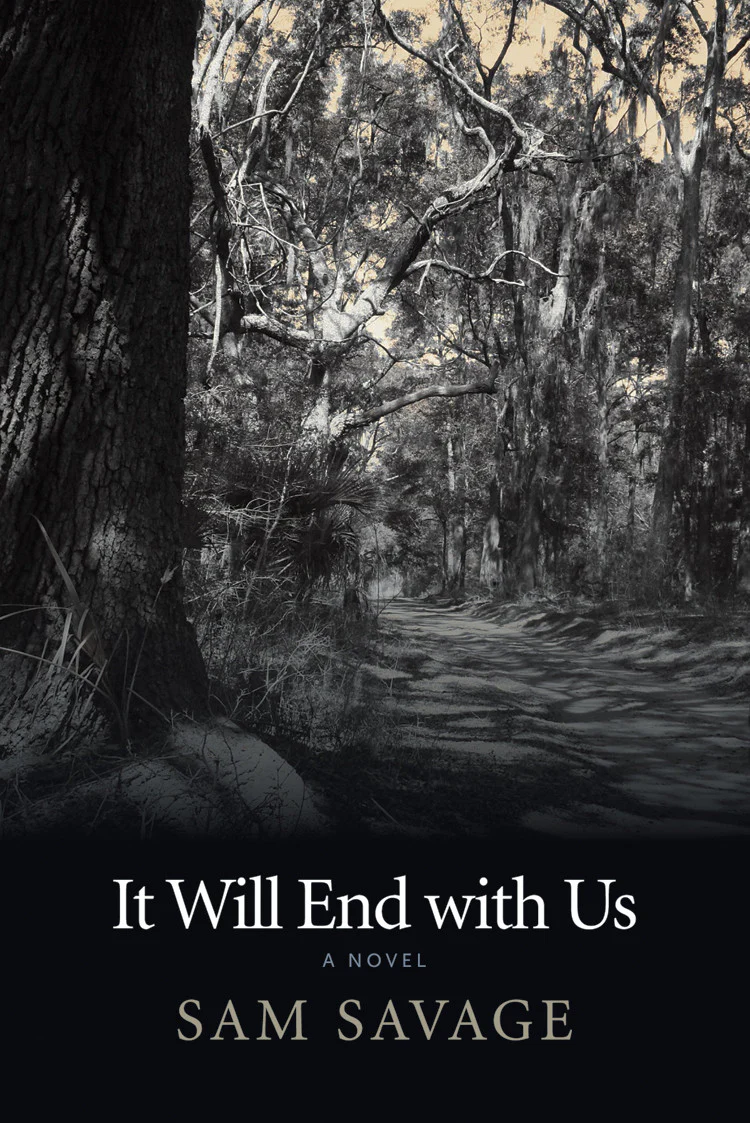
It Will End with Us
A novel by Sam Savage
October 20, 2014 • 4.5 x 7.5 • 150 Pages • 978-1-56689-372-5
A meditation on memory and futility among the ruins of artistic ambition, family myth, and the fall of the South.
Savage’s latest novel dismantles the mythic greats of the past—an American South that never was, and a mother’s artistic pretensions that never should have been. In the story of Eve, Savage finds a voice that captures both the frustrations of our degraded world and the tender sympathy it evokes for all our sad efforts to leave something beautiful behind.
About the Author
Sam Savage is the best-selling author of Firmin: Adventures of a Metropolitan Lowlife, The Cry of the Sloth, Glass, and The Way of the Dog. A native of South Carolina, Savage holds a PhD in philosophy from Yale University. He was a finalist for the Barnes & Noble Discover Great New Writers Award, the PEN L.L. Winship Award, and the Society of Midland Authors Award. Savage resides in Madison, Wisconsin.
Thanks to a 2013 ADA Access Improvement Grant administered by VSA Minnesota for the Metropolitan Regional Arts Council, this title is also formatted for screen readers which make text accessible to the blind and visually impaired. To purchase this title for use with a screen reader please email us at [email protected].
Reviews
Winner of the O. Henry Prize for “Cigarettes”
Newsweek’s Favorite Books of 2014
Library Journal’s “25 Key Indie Fiction Titles, Fall 2014–Winter 2015”
“Reading the novel can feel like admiring dewdrops on a spider’s web, each paragraph and sentence glittering exquisitely. . . . Savage’s is a book of the heart as much as the head. Which is itself an accomplishment of no small note: to recognize the arbitrary, degraded thing that is memory, and allow it its loveliness for all of that.” —New York Times Sunday Book Review
“Savage’s lean, meditative novels, so meticulously pitched and poised, eschew the bloated excess and garish dazzle that can mar those from writers half his age. . . . In Savage’s novel, or Eve’s ‘inventory of tiny things,’ it is the small, fleeting and quiet details that speak volumes.” —Star Tribune
“To call the book a novel, however, fails to acknowledge the poetry in its form.” —Carolina Quarterly
“Savage constructs novel from scattered memories.” —Wisconsin State Journal
“A Southern childhood in duskier, Tennessee Williams times, offering an aphoristic scattering of memories—one- and two-sentence stand-alones that spill isolated down the page like little gems . . . showing us how memory works and how we make sense of our lives, drip by drip and sensation by sensation.” —Library Journal
“Sam Savage, once more, elicits our admiration and aesthetic appreciation for reminding us not to be complacent, and to interrogate what Eve terms the ‘inner reaches’—our inner selves—and what we believe, in a compact with others, to be the real world.” —Numero Cinq
“A small book that tells a huge story about a Southern woman’s memories of her mother and a vanishing world.” —Shelf Awareness
“The narrative perfectly replicates the capriciousness of memory.” —AskMen.com
“A novel written in a most unusual way: a series of brief paragraphs which sometimes read like diary entries, other times like descriptions from a book of recollections. The mosaic effect is enhanced by the author’s skillful use of language, his vivid, poetically-charged prose style.” —Lively Arts
“If the world—all its hysteric noise—was muted for just one minute, Sam Savage is what you might be fortunate enough to hear. His elegant laconism, his leaps across the self-evident, his soft aplomb, and the rarified air he bestows upon the mundane make him the only American writer worthy of the label the true eccentric.” —Valeria Luiselli
“As Savage indicates with philosophical acumen . . . the private symbol is a myth.” —Schooner
“Sam Savage manages to be both artful and literal-minded in this faux autobiographical tale of childhood and a mother afflicted and finally driven mad by her wish for artistic success. Savage writes knowingly about the uncertainties of childhood memory, but creates a convincing world of sibling combat and adult pretension. A wonderful, absorbing novel.” —C. Michael Curtis, Fiction Editor, Atlantic Monthly
“Savage’s stylistic movements around structure and prose helps texture this narrative and make the emotional vulnerability of Eve even more resonating . . . It Will End with Us is a beautiful portrait of a woman who attempts to recreate what she has left by meditating on images.” —Online Sundries
“There’s a vividness to these false memories; even those scraps battered ‘beyond recognition’ shine with a light of their own.” —Wisconsin State Journal
Product Information
Product Information
Shipping & Returns
Shipping & Returns
Description
A novel by Sam Savage
October 20, 2014 • 4.5 x 7.5 • 150 Pages • 978-1-56689-372-5
A meditation on memory and futility among the ruins of artistic ambition, family myth, and the fall of the South.
Savage’s latest novel dismantles the mythic greats of the past—an American South that never was, and a mother’s artistic pretensions that never should have been. In the story of Eve, Savage finds a voice that captures both the frustrations of our degraded world and the tender sympathy it evokes for all our sad efforts to leave something beautiful behind.
About the Author
Sam Savage is the best-selling author of Firmin: Adventures of a Metropolitan Lowlife, The Cry of the Sloth, Glass, and The Way of the Dog. A native of South Carolina, Savage holds a PhD in philosophy from Yale University. He was a finalist for the Barnes & Noble Discover Great New Writers Award, the PEN L.L. Winship Award, and the Society of Midland Authors Award. Savage resides in Madison, Wisconsin.
Thanks to a 2013 ADA Access Improvement Grant administered by VSA Minnesota for the Metropolitan Regional Arts Council, this title is also formatted for screen readers which make text accessible to the blind and visually impaired. To purchase this title for use with a screen reader please email us at [email protected].
Reviews
Winner of the O. Henry Prize for “Cigarettes”
Newsweek’s Favorite Books of 2014
Library Journal’s “25 Key Indie Fiction Titles, Fall 2014–Winter 2015”
“Reading the novel can feel like admiring dewdrops on a spider’s web, each paragraph and sentence glittering exquisitely. . . . Savage’s is a book of the heart as much as the head. Which is itself an accomplishment of no small note: to recognize the arbitrary, degraded thing that is memory, and allow it its loveliness for all of that.” —New York Times Sunday Book Review
“Savage’s lean, meditative novels, so meticulously pitched and poised, eschew the bloated excess and garish dazzle that can mar those from writers half his age. . . . In Savage’s novel, or Eve’s ‘inventory of tiny things,’ it is the small, fleeting and quiet details that speak volumes.” —Star Tribune
“To call the book a novel, however, fails to acknowledge the poetry in its form.” —Carolina Quarterly
“Savage constructs novel from scattered memories.” —Wisconsin State Journal
“A Southern childhood in duskier, Tennessee Williams times, offering an aphoristic scattering of memories—one- and two-sentence stand-alones that spill isolated down the page like little gems . . . showing us how memory works and how we make sense of our lives, drip by drip and sensation by sensation.” —Library Journal
“Sam Savage, once more, elicits our admiration and aesthetic appreciation for reminding us not to be complacent, and to interrogate what Eve terms the ‘inner reaches’—our inner selves—and what we believe, in a compact with others, to be the real world.” —Numero Cinq
“A small book that tells a huge story about a Southern woman’s memories of her mother and a vanishing world.” —Shelf Awareness
“The narrative perfectly replicates the capriciousness of memory.” —AskMen.com
“A novel written in a most unusual way: a series of brief paragraphs which sometimes read like diary entries, other times like descriptions from a book of recollections. The mosaic effect is enhanced by the author’s skillful use of language, his vivid, poetically-charged prose style.” —Lively Arts
“If the world—all its hysteric noise—was muted for just one minute, Sam Savage is what you might be fortunate enough to hear. His elegant laconism, his leaps across the self-evident, his soft aplomb, and the rarified air he bestows upon the mundane make him the only American writer worthy of the label the true eccentric.” —Valeria Luiselli
“As Savage indicates with philosophical acumen . . . the private symbol is a myth.” —Schooner
“Sam Savage manages to be both artful and literal-minded in this faux autobiographical tale of childhood and a mother afflicted and finally driven mad by her wish for artistic success. Savage writes knowingly about the uncertainties of childhood memory, but creates a convincing world of sibling combat and adult pretension. A wonderful, absorbing novel.” —C. Michael Curtis, Fiction Editor, Atlantic Monthly
“Savage’s stylistic movements around structure and prose helps texture this narrative and make the emotional vulnerability of Eve even more resonating . . . It Will End with Us is a beautiful portrait of a woman who attempts to recreate what she has left by meditating on images.” —Online Sundries
“There’s a vividness to these false memories; even those scraps battered ‘beyond recognition’ shine with a light of their own.” —Wisconsin State Journal