Kirkus, “Best Fiction of 2019”
Kirkus, “Best Fiction in Translation of 2019”
Shortlisted for the 2019 Man Booker International Prize
Vanity Fair, “Best Books of 2019”
Entropy, “Best of 2019”
“A lyrical evocation of Chile’s lost generation, trying ever more desperately to escape their parents’ political shadow.”—Man Booker International Judges
\"This novel is vividly rooted in Chile, yet the quests at its heart—to witness and survive suffering, to put an intractable past to rest—are universally resonant.\" —Publishers Weekly
“A centrifugal story of death, history, and mathematics . . . a debut that leaves the reader wanting more.” —Kirkus
“You could call The Remainder a literary kaleidoscope: look at it one way and you see how the past lays a crippling hand on the generation that follows political catastrophe; shift the focus and you’re plunged into a darkly comic road trip with a hungover trio in an empty hearse chasing a lost coffin across the Andes cordillera.” —The Spectator
“While writers such as Pedro Lemebel and José Donoso have explored the regime’s impact on those who lived through it, Zerán is concerned with the next generation. Felipe, Iquela and Paloma are the children of ex-militants, attempting to “unremember” the past in Chile’s haunted capital, Santiago.” —TIME
“The second-generation trauma narrative gets a Chilean spin in Zerán’s intense novel of interior monologues, which is Faulknerian in themes, structure, and style.” —Vulture
“A mesmerizing, roaming look at intergenerational trauma, told in a specific and surreal style that shimmers and shifts on the page and in the mind.” —Nylon
“Truly stunning, full of deft turns of phrase. . . . shines especially bright when unwinding Felipe’s melodic monologues.” —Los Angeles Times
“Deeply compelling.” —The Guardian
“A haunted novel, awash with sinister and elegiac moods. It stands as a testament to the way the past can unsettle us.” —Star Tribune
“Neither the characters nor the narrative ever deal directly with the historic events themselves, but rather with the fallout – the photographs, vocabulary, places and people left behind as remnants. Zerán seamlessly alternates between the voices of Iquela and Felipe, highlighting the opposing and gendered ways they have reacted to the circumstances of their childhood.” —The Times Literary Supplement
“Trabucco Zerán urges readers to value subtext just as much as the ‘official’ narrative . . . a smart, vivid, and richly layered story.” —The Adroit Journal
“Alia Trabucco Zerán’s writing is gorgeous: she captures the courage, vulnerability, and suffering of her characters beautifully.” —Book Riot
“Intense and haunting, The Remainder is a startling reckoning with the history of violence.” —Book Riot
“This is a powerful debut.” —Ms. Magazine
\"The Remainder tells us very little about Chile under Pinochet; but everything about what it is like to grow up in the shadow of other people’s unhappiness.” —The Big Issue
“A highly recommended debut from one of the most exciting new voices in contemporary Latin American literature.” —Morning Star
“Fusing the personal and the political, Zerán aims to capture the legacy of Chile’s bloodshed.” —The Irish Times
“A perfect companion book to last year’s Empty Set, another sparse and brilliant Latin American novel with an experimental structure from the same publisher.” —Chicago Tribune
“Both a road trip and a countdown . . . fast-paced and gripping.” —Librairie Drawn & Quarterly
“The Remainder is a bold literary approach to a national tragedy, which marks a growing desire to confront Chile’s recent history directly, acknowledging those ‘hard truths’.” —minor literature[s]
“The Remainder controls a remarkable range of registers (it is, by turns, lyrical, elegiac, sensual, funny, tragic). The author, like her characters, is obsessed with words, those ‘cracks in language’ that house our particular ways of understanding things. This novel is sure to endure.” —Edmundo Paz Soldán
“A powerful, impressive novel, dotted with scenes that are as unique as they are unforgettable.” —Lina Meruane
“A fundamental book about what it means to mourn the past, about the remainders of a history that refuses to be forgotten. This is the debut we all wish we had written. A spirited, brave, urgent book, capable of weaving the political and the poetic.” —Carlos Fonseca
“A Chilean road trip reveals new ways to think about historical memory.” —Alba Lara, Iowa Literaria
“The Remainder redefines the political novel. . . . The voices in The Remainder are some of the most powerful to have come out of Latin America in the last year.” —Bárbara Pérez, “Granta en Español, 5 years later,” Instrucciones de Uso
“The sharpest, most incisive reprieve from novels dealing with the dictatorship by writers like Bolaño, Marín, Cerda y Varas.” —Rodrigo Pinto, El Mercurio
“One of the best publications of 2015.”—Patricia Espinosa, Las Últimas Noticias
“Like all of Sophie’s works, the translation is superb. . . . Her translations feel essential but not labored over. Passionate readers of translated works know the confidence that comes with seeing a familiar name as the translator; Sophie is one of those.” —Mark Haber, Brazos Bookstore
“Zerán’s formidable command of two distinct styles throughout the novel (translated beautifully by Sophie Hughes), her ability to plumb the depths of generational trauma and her ability to engage with and deconstruct the concept of collective memory propels The Remainder to the status of masterpiece.” —Paperback Paris
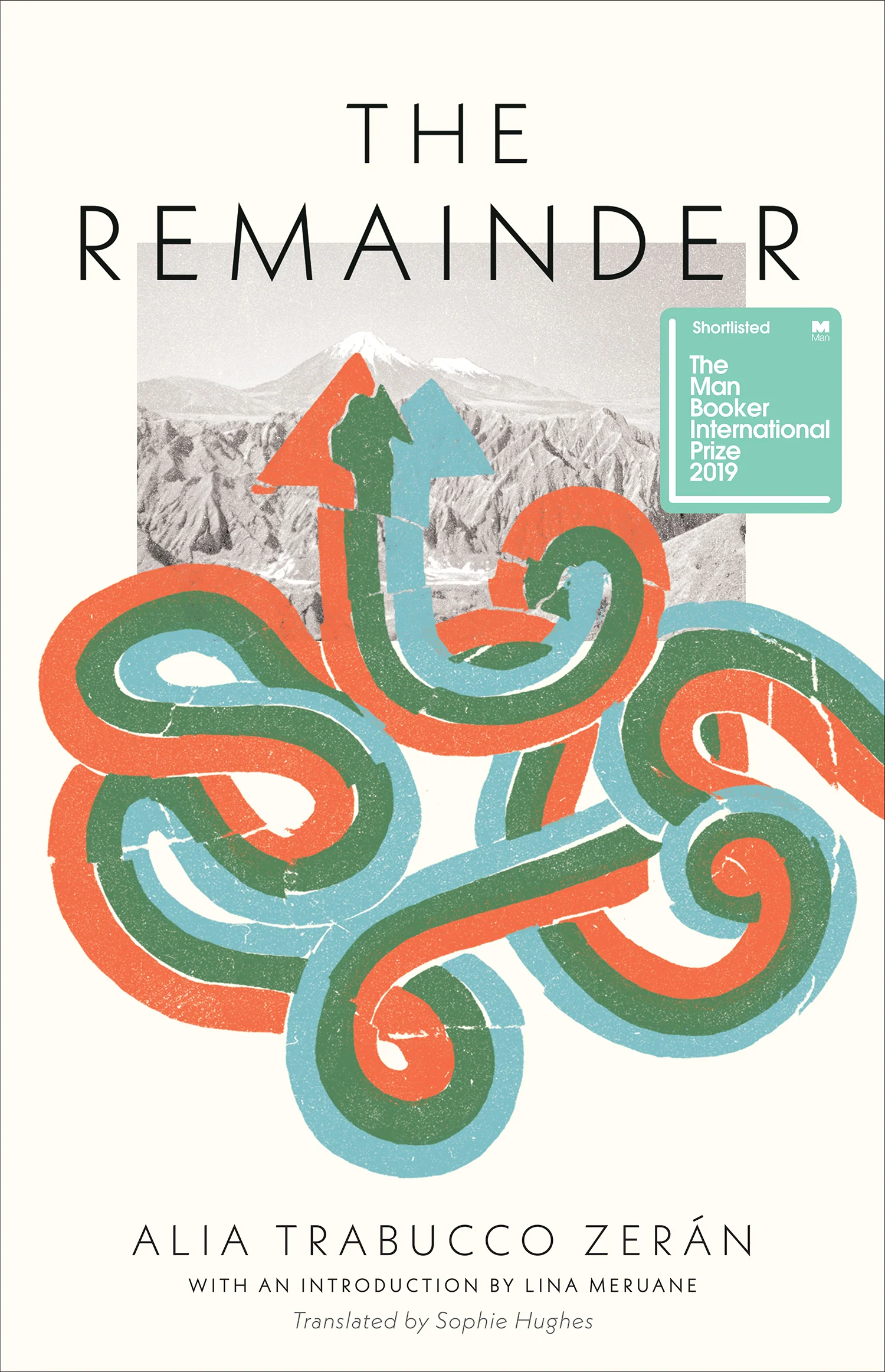
The Remainder
A novel by Alia Trabucco Zerán, translated by Sophie Hughes
August 6, 2019 • 5 x 7.75 • 240 pages • 978-1-56689-550-7
A coffin, a camera, a bottle of pisco: three friends embark on a road trip through the Andes to confront a history they can neither remember nor forget.
Felipe and Iquela, two young friends in modern day Santiago, live in the legacy of Chile’s dictatorship. Felipe prowls the streets counting dead bodies real and imagined, aspiring to a perfect number that might offer closure. Iquela and Paloma, an old acquaintance from Iquela’s childhood, search for a way to reconcile their fragile lives with their parents’ violent militant past. The body of Paloma’s mother gets lost in transit, sending the three on a pisco-fueled journey up the cordillera as they confront the pain that stretches across generations.
About the Author
Alia Trabucco Zerán was born in Chile in 1983. She holds an MFA in creative writing in Spanish from New York University and a PhD in Latin American Studies from University College London. La Resta (The Remainder) was chosen by El País as one of its top ten debuts of 2015 and was granted a Best Literary Work Award from the Chilean Council for the Arts. She is also the author of Las homicidas, a non-fiction book about women who kill.
Sophie Hughes is an award-winning translator from Spanish. She has been the recipient of an American PEN/Heim Translation Fund grant, and in 2018 she was announced as one of the Arts Foundation 25th anniversary fellows for her contribution to the field of literary translation.
Praise for The Remainder
Kirkus, “Best Fiction of 2019”
Kirkus, “Best Fiction in Translation of 2019”
Shortlisted for the 2019 Man Booker International Prize
Vanity Fair, “Best Books of 2019”
Entropy, “Best of 2019”
“A lyrical evocation of Chile’s lost generation, trying ever more desperately to escape their parents’ political shadow.”—Man Booker International Judges
"This novel is vividly rooted in Chile, yet the quests at its heart—to witness and survive suffering, to put an intractable past to rest—are universally resonant." —Publishers Weekly
“A centrifugal story of death, history, and mathematics . . . a debut that leaves the reader wanting more.” —Kirkus
“You could call The Remainder a literary kaleidoscope: look at it one way and you see how the past lays a crippling hand on the generation that follows political catastrophe; shift the focus and you’re plunged into a darkly comic road trip with a hungover trio in an empty hearse chasing a lost coffin across the Andes cordillera.” —The Spectator
“While writers such as Pedro Lemebel and José Donoso have explored the regime’s impact on those who lived through it, Zerán is concerned with the next generation. Felipe, Iquela and Paloma are the children of ex-militants, attempting to “unremember” the past in Chile’s haunted capital, Santiago.” —TIME
“The second-generation trauma narrative gets a Chilean spin in Zerán’s intense novel of interior monologues, which is Faulknerian in themes, structure, and style.” —Vulture
“A mesmerizing, roaming look at intergenerational trauma, told in a specific and surreal style that shimmers and shifts on the page and in the mind.” —Nylon
“Truly stunning, full of deft turns of phrase. . . . shines especially bright when unwinding Felipe’s melodic monologues.” —Los Angeles Times
“Deeply compelling.” —The Guardian
“A haunted novel, awash with sinister and elegiac moods. It stands as a testament to the way the past can unsettle us.” —Star Tribune
“Neither the characters nor the narrative ever deal directly with the historic events themselves, but rather with the fallout – the photographs, vocabulary, places and people left behind as remnants. Zerán seamlessly alternates between the voices of Iquela and Felipe, highlighting the opposing and gendered ways they have reacted to the circumstances of their childhood.” —The Times Literary Supplement
“Trabucco Zerán urges readers to value subtext just as much as the ‘official’ narrative . . . a smart, vivid, and richly layered story.” —The Adroit Journal
“Alia Trabucco Zerán’s writing is gorgeous: she captures the courage, vulnerability, and suffering of her characters beautifully.” —Book Riot
“Intense and haunting, The Remainder is a startling reckoning with the history of violence.” —Book Riot
“This is a powerful debut.” —Ms. Magazine
"The Remainder tells us very little about Chile under Pinochet; but everything about what it is like to grow up in the shadow of other people’s unhappiness.” —The Big Issue
“A highly recommended debut from one of the most exciting new voices in contemporary Latin American literature.” —Morning Star
“Fusing the personal and the political, Zerán aims to capture the legacy of Chile’s bloodshed.” —The Irish Times
“A perfect companion book to last year’s Empty Set, another sparse and brilliant Latin American novel with an experimental structure from the same publisher.” —Chicago Tribune
“Both a road trip and a countdown . . . fast-paced and gripping.” —Librairie Drawn & Quarterly
“The Remainder is a bold literary approach to a national tragedy, which marks a growing desire to confront Chile’s recent history directly, acknowledging those ‘hard truths’.” —minor literature[s]
“The Remainder controls a remarkable range of registers (it is, by turns, lyrical, elegiac, sensual, funny, tragic). The author, like her characters, is obsessed with words, those ‘cracks in language’ that house our particular ways of understanding things. This novel is sure to endure.” —Edmundo Paz Soldán
“A powerful, impressive novel, dotted with scenes that are as unique as they are unforgettable.” —Lina Meruane
“A fundamental book about what it means to mourn the past, about the remainders of a history that refuses to be forgotten. This is the debut we all wish we had written. A spirited, brave, urgent book, capable of weaving the political and the poetic.” —Carlos Fonseca
“A Chilean road trip reveals new ways to think about historical memory.” —Alba Lara, Iowa Literaria
“The Remainder redefines the political novel. . . . The voices in The Remainder are some of the most powerful to have come out of Latin America in the last year.” —Bárbara Pérez, “Granta en Español, 5 years later,” Instrucciones de Uso
“The sharpest, most incisive reprieve from novels dealing with the dictatorship by writers like Bolaño, Marín, Cerda y Varas.” —Rodrigo Pinto, El Mercurio
“One of the best publications of 2015.”—Patricia Espinosa, Las Últimas Noticias
“Like all of Sophie’s works, the translation is superb. . . . Her translations feel essential but not labored over. Passionate readers of translated works know the confidence that comes with seeing a familiar name as the translator; Sophie is one of those.” —Mark Haber, Brazos Bookstore
“Zerán’s formidable command of two distinct styles throughout the novel (translated beautifully by Sophie Hughes), her ability to plumb the depths of generational trauma and her ability to engage with and deconstruct the concept of collective memory propels The Remainder to the status of masterpiece.” —Paperback Paris
Original: $16.95
-65%$16.95
$5.93Product Information
Product Information
Shipping & Returns
Shipping & Returns
Description
A novel by Alia Trabucco Zerán, translated by Sophie Hughes
August 6, 2019 • 5 x 7.75 • 240 pages • 978-1-56689-550-7
A coffin, a camera, a bottle of pisco: three friends embark on a road trip through the Andes to confront a history they can neither remember nor forget.
Felipe and Iquela, two young friends in modern day Santiago, live in the legacy of Chile’s dictatorship. Felipe prowls the streets counting dead bodies real and imagined, aspiring to a perfect number that might offer closure. Iquela and Paloma, an old acquaintance from Iquela’s childhood, search for a way to reconcile their fragile lives with their parents’ violent militant past. The body of Paloma’s mother gets lost in transit, sending the three on a pisco-fueled journey up the cordillera as they confront the pain that stretches across generations.
About the Author
Alia Trabucco Zerán was born in Chile in 1983. She holds an MFA in creative writing in Spanish from New York University and a PhD in Latin American Studies from University College London. La Resta (The Remainder) was chosen by El País as one of its top ten debuts of 2015 and was granted a Best Literary Work Award from the Chilean Council for the Arts. She is also the author of Las homicidas, a non-fiction book about women who kill.
Sophie Hughes is an award-winning translator from Spanish. She has been the recipient of an American PEN/Heim Translation Fund grant, and in 2018 she was announced as one of the Arts Foundation 25th anniversary fellows for her contribution to the field of literary translation.
Praise for The Remainder
Kirkus, “Best Fiction of 2019”
Kirkus, “Best Fiction in Translation of 2019”
Shortlisted for the 2019 Man Booker International Prize
Vanity Fair, “Best Books of 2019”
Entropy, “Best of 2019”
“A lyrical evocation of Chile’s lost generation, trying ever more desperately to escape their parents’ political shadow.”—Man Booker International Judges
"This novel is vividly rooted in Chile, yet the quests at its heart—to witness and survive suffering, to put an intractable past to rest—are universally resonant." —Publishers Weekly
“A centrifugal story of death, history, and mathematics . . . a debut that leaves the reader wanting more.” —Kirkus
“You could call The Remainder a literary kaleidoscope: look at it one way and you see how the past lays a crippling hand on the generation that follows political catastrophe; shift the focus and you’re plunged into a darkly comic road trip with a hungover trio in an empty hearse chasing a lost coffin across the Andes cordillera.” —The Spectator
“While writers such as Pedro Lemebel and José Donoso have explored the regime’s impact on those who lived through it, Zerán is concerned with the next generation. Felipe, Iquela and Paloma are the children of ex-militants, attempting to “unremember” the past in Chile’s haunted capital, Santiago.” —TIME
“The second-generation trauma narrative gets a Chilean spin in Zerán’s intense novel of interior monologues, which is Faulknerian in themes, structure, and style.” —Vulture
“A mesmerizing, roaming look at intergenerational trauma, told in a specific and surreal style that shimmers and shifts on the page and in the mind.” —Nylon
“Truly stunning, full of deft turns of phrase. . . . shines especially bright when unwinding Felipe’s melodic monologues.” —Los Angeles Times
“Deeply compelling.” —The Guardian
“A haunted novel, awash with sinister and elegiac moods. It stands as a testament to the way the past can unsettle us.” —Star Tribune
“Neither the characters nor the narrative ever deal directly with the historic events themselves, but rather with the fallout – the photographs, vocabulary, places and people left behind as remnants. Zerán seamlessly alternates between the voices of Iquela and Felipe, highlighting the opposing and gendered ways they have reacted to the circumstances of their childhood.” —The Times Literary Supplement
“Trabucco Zerán urges readers to value subtext just as much as the ‘official’ narrative . . . a smart, vivid, and richly layered story.” —The Adroit Journal
“Alia Trabucco Zerán’s writing is gorgeous: she captures the courage, vulnerability, and suffering of her characters beautifully.” —Book Riot
“Intense and haunting, The Remainder is a startling reckoning with the history of violence.” —Book Riot
“This is a powerful debut.” —Ms. Magazine
"The Remainder tells us very little about Chile under Pinochet; but everything about what it is like to grow up in the shadow of other people’s unhappiness.” —The Big Issue
“A highly recommended debut from one of the most exciting new voices in contemporary Latin American literature.” —Morning Star
“Fusing the personal and the political, Zerán aims to capture the legacy of Chile’s bloodshed.” —The Irish Times
“A perfect companion book to last year’s Empty Set, another sparse and brilliant Latin American novel with an experimental structure from the same publisher.” —Chicago Tribune
“Both a road trip and a countdown . . . fast-paced and gripping.” —Librairie Drawn & Quarterly
“The Remainder is a bold literary approach to a national tragedy, which marks a growing desire to confront Chile’s recent history directly, acknowledging those ‘hard truths’.” —minor literature[s]
“The Remainder controls a remarkable range of registers (it is, by turns, lyrical, elegiac, sensual, funny, tragic). The author, like her characters, is obsessed with words, those ‘cracks in language’ that house our particular ways of understanding things. This novel is sure to endure.” —Edmundo Paz Soldán
“A powerful, impressive novel, dotted with scenes that are as unique as they are unforgettable.” —Lina Meruane
“A fundamental book about what it means to mourn the past, about the remainders of a history that refuses to be forgotten. This is the debut we all wish we had written. A spirited, brave, urgent book, capable of weaving the political and the poetic.” —Carlos Fonseca
“A Chilean road trip reveals new ways to think about historical memory.” —Alba Lara, Iowa Literaria
“The Remainder redefines the political novel. . . . The voices in The Remainder are some of the most powerful to have come out of Latin America in the last year.” —Bárbara Pérez, “Granta en Español, 5 years later,” Instrucciones de Uso
“The sharpest, most incisive reprieve from novels dealing with the dictatorship by writers like Bolaño, Marín, Cerda y Varas.” —Rodrigo Pinto, El Mercurio
“One of the best publications of 2015.”—Patricia Espinosa, Las Últimas Noticias
“Like all of Sophie’s works, the translation is superb. . . . Her translations feel essential but not labored over. Passionate readers of translated works know the confidence that comes with seeing a familiar name as the translator; Sophie is one of those.” —Mark Haber, Brazos Bookstore
“Zerán’s formidable command of two distinct styles throughout the novel (translated beautifully by Sophie Hughes), her ability to plumb the depths of generational trauma and her ability to engage with and deconstruct the concept of collective memory propels The Remainder to the status of masterpiece.” —Paperback Paris