Winner of the 2022 British Academy Book Prize for Global Cultural Understanding
Finalist for the 2022 National Book Critics Circle Award in Criticism
The New York Times, “New Books in Translation”
The New York Times, “6 New True Crime Books”
The Millions, “Most Anticipated”
Book Riot, “24 Must-Read 2022 Books in Translation”
“Using court records, newspaper articles and museum exhibits—which she punctuates with her own whip-smart diary entries—Trabucco Zerán reconstructs each crime scene, backdrop and all.” —Tina Jordan, The New York Times
“Trabucco Zerán, well translated by Sophie Hughes, is a moving, imaginative writer—which is important, given that her four subjects are ‘genuine wrongdoers, proven killers, [and] almost irredeemable beings.’ . . . [When Women Kill] applies a thoughtful feminist lens to stories as painful as they are gory.” —Lily Meyer, NPR
“A highly original and beautifully written work, which uncovers uncomfortable truths about a society and its attitudes to female homicides. This is a timely and important work that invites the reader to reconsider the relationship between gender and violence—not just in Chile but globally. Trabucco Zerán has applied her legal training to the creation of this outstanding book, reminding us that research takes many forms and is not only the preserve of the academic world.” —Judges’ citation, British Academy Book Prize for Global Cultural Understanding
“Throughout, the language is both precise and evocative, and the author’s evaluation of the various circumstances is readable, trenchant, and intersectional. A formally inventive, lyrical, feminist analysis of Chile’s famous female murderers.” —Kirkus, starred review
“By bringing these unexamined tales to light, the hybrid nature of When Women Kill is persuasive in its insistence on looking deeper, echoing the fluctuations in the perceptions of womanhood. . . . Weaving together multiple literary styles and a wide range of voices, When Women Kill constantly remolds and blends genres, culminating in an irresistibly compelling read.” —Suhasini Patni, Asymptote Journal
“Trabucco Zerán’s project is not to endorse their crimes, nor to sensationalize them—she is critical and unsparing in her analysis. Rather, When Women Kill reveals how narratives and cultural systems work in the wake of women’s crimes.” —Morgan Graham, Cleveland Review of Books
“When Women Kill takes on an ambitious series of goals—to recount the stories of four killings, to find connections between all of them, and to show how they relate to a societal progression in Chile. To her credit, she succeeds—and the resulting work is one that true crime buffs and fans of cultural history can appreciate in equal measure.” —Tobias Carroll, Words Without Borders
“A fascinating must-read for all true crime fans, a book that I annotated, starred, dogeared, and just generally obsessed over. . . . Brilliant.” —Leah Rachel von Essen, Book Riot
“In propulsive prose impeccably translated by Sophie Hughes, Trabucco Zerán recounts each case. . . . Like other great books of crime writing, When Women Kill is more about society’s response to violence than the violence itself. Trabucco Zerán doesn’t excuse her killer women, nor does she condemn them. Instead, she explores how, in a sexist society, the reaction to their crimes is all too predictable.” —Henry Hietala, Rain Taxi Review
“A vital and beautifully written book. . . . Equal parts essay, detective story, diary, and feminist discourse, its most moving and brilliant moment may be when Trabucco Zerán dramatizes the only case not yet depicted in art: the portrait of a new Medea, tragic and unsettling, but more than that, transgressive, hungry for another life.” —Giuseppe Caputo
“An outstanding work of archival research. Trabucco Zerán incorporates her diary into her investigation. A smart, rigorous, and necessary book.” —Liliana Colanzi, El País
“This essay turns a stark gaze upon the condition of women in Chile in the last century.” —Nona Fernández
“When Women Kill is a magnificent work of creative nonfiction: provocative, intelligent, and moving. In it, Alia Trabucco Zerán makes use of her talents as a writer and researcher to reconstruct the complex stories of four women accused of violent crimes in the twentieth century. The result is a masterful and pertinent account full of humanity and emotion.” —Fernanda Melchor
“This brilliant essay paints a cogent and unsparing portrait of the rhetorical operations of the patriarchy.” —Lina Meruane
Praise for The Remainder
Kirkus, “Best Fiction of 2019”
Kirkus, “Best Fiction in Translation of 2019”
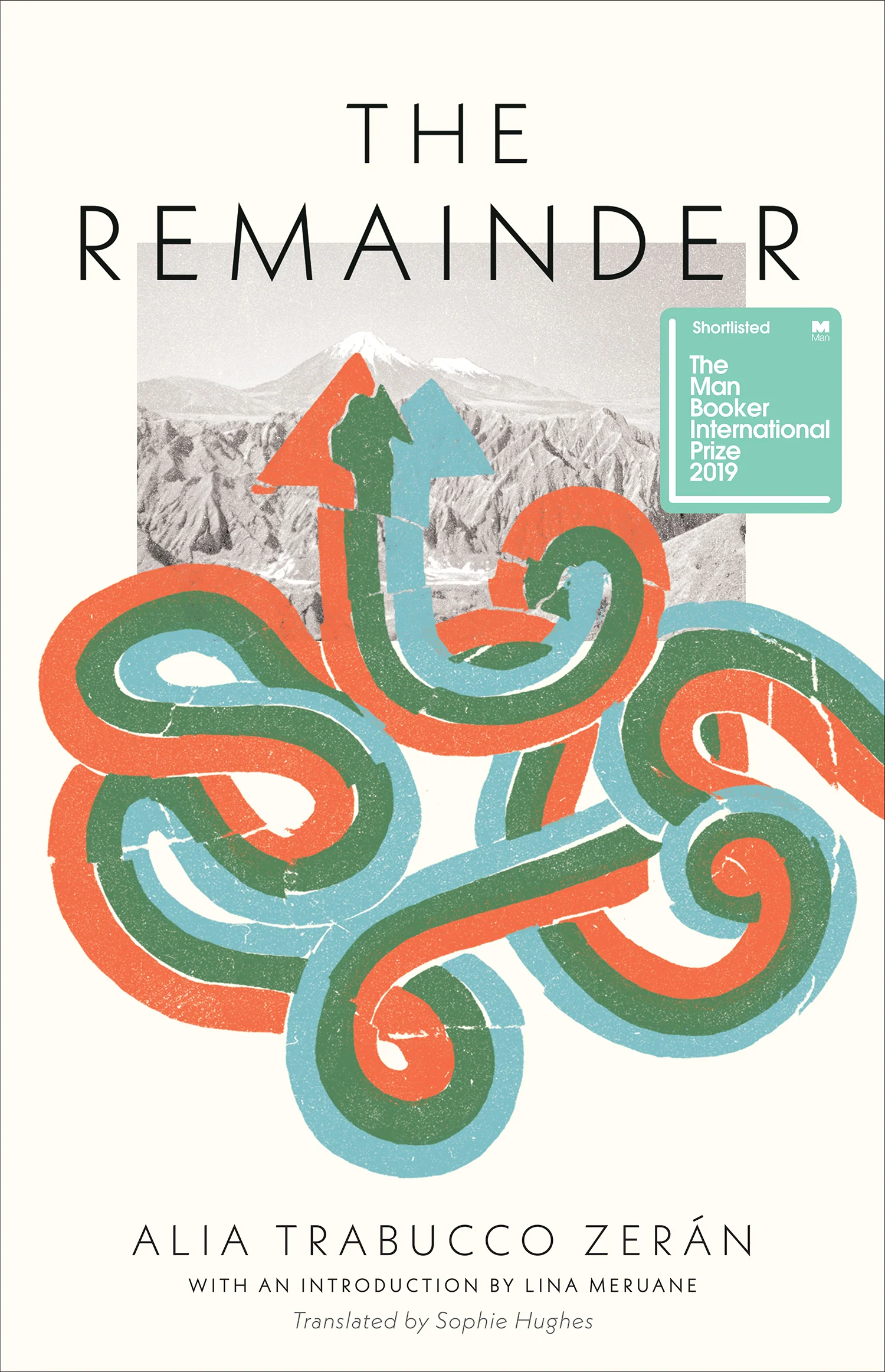
Shortlisted for the 2019 Man Booker International Prize
Vanity Fair, “Best Books of 2019”
Entropy, “Best of 2019”
“A lyrical evocation of Chile’s lost generation, trying ever more desperately to escape their parents’ political shadow.” —Man Booker International Judges
\"This novel is vividly rooted in Chile, yet the quests at its heart—to witness and survive suffering, to put an intractable past to rest—are universally resonant.\" —Publishers Weekly
“A centrifugal story of death, history, and mathematics . . . a debut that leaves the reader wanting more.” —Kirkus
“You could call The Remainder a literary kaleidoscope: look at it one way and you see how the past lays a crippling hand on the generation that follows political catastrophe; shift the focus and you’re plunged into a darkly comic road trip with a hungover trio in an empty hearse chasing a lost coffin across the Andes cordillera.” —The Spectator
“While writers such as Pedro Lemebel and José Donoso have explored the regime’s impact on those who lived through it, Zerán is concerned with the next generation. Felipe, Iquela and Paloma are the children of ex-militants, attempting to “unremember” the past in Chile’s haunted capital, Santiago.” —TIME
“The second-generation trauma narrative gets a Chilean spin in Zerán’s intense novel of interior monologues, which is Faulknerian in themes, structure, and style.” —Vulture
“A mesmerizing, roaming look at intergenerational trauma, told in a specific and surreal style that shimmers and shifts on the page and in the mind.” —Nylon
“Truly stunning, full of deft turns of phrase. . . . Shines especially bright when unwinding Felipe’s melodic monologues.” —Los Angeles Times
“Deeply compelling.” —The Guardian
“A haunted novel, awash with sinister and elegiac moods. It stands as a testament to the way the past can unsettle us.” —Star Tribune
“Neither the characters nor the narrative ever deal directly with the historic events themselves, but rather with the fallout – the photographs, vocabulary, places and people left behind as remnants. Zerán seamlessly alternates between the voices of Iquela and Felipe, highlighting the opposing and gendered ways they have reacted to the circumstances of their childhood.” —The Times Literary Supplement
“The Remainder controls a remarkable range of registers (it is, by turns, lyrical, elegiac, sensual, funny, tragic). The author, like her characters, is obsessed with words, those ‘cracks in language’ that house our particular ways of understanding things. This novel is sure to endure.” —Edmundo Paz Soldán
“A powerful, impressive novel, dotted with scenes that are as unique as they are unforgettable.” —Lina Meruane
“A fundamental book about what it means to mourn the past, about the remainders of a history that refuses to be forgotten. This is the debut we all wish we had written. A spirited, brave, urgent book, capable of weaving the political and the poetic.” —Carlos Fonseca
","image":["/images/coffeehousepressstore.shop/images/product/when-women-kill-1.jpg"],"sku":"when-women-kill","brand":{"@type":"Brand","name":"Coffee House Press"},"offers":{"@type":"AggregateOffer","lowPrice":5.93,"highPrice":5.93,"priceCurrency":"USD","availability":"https://schema.org/InStock","url":"https://coffeehousepressstore.shop/products/when-women-kill","offerCount":1}}
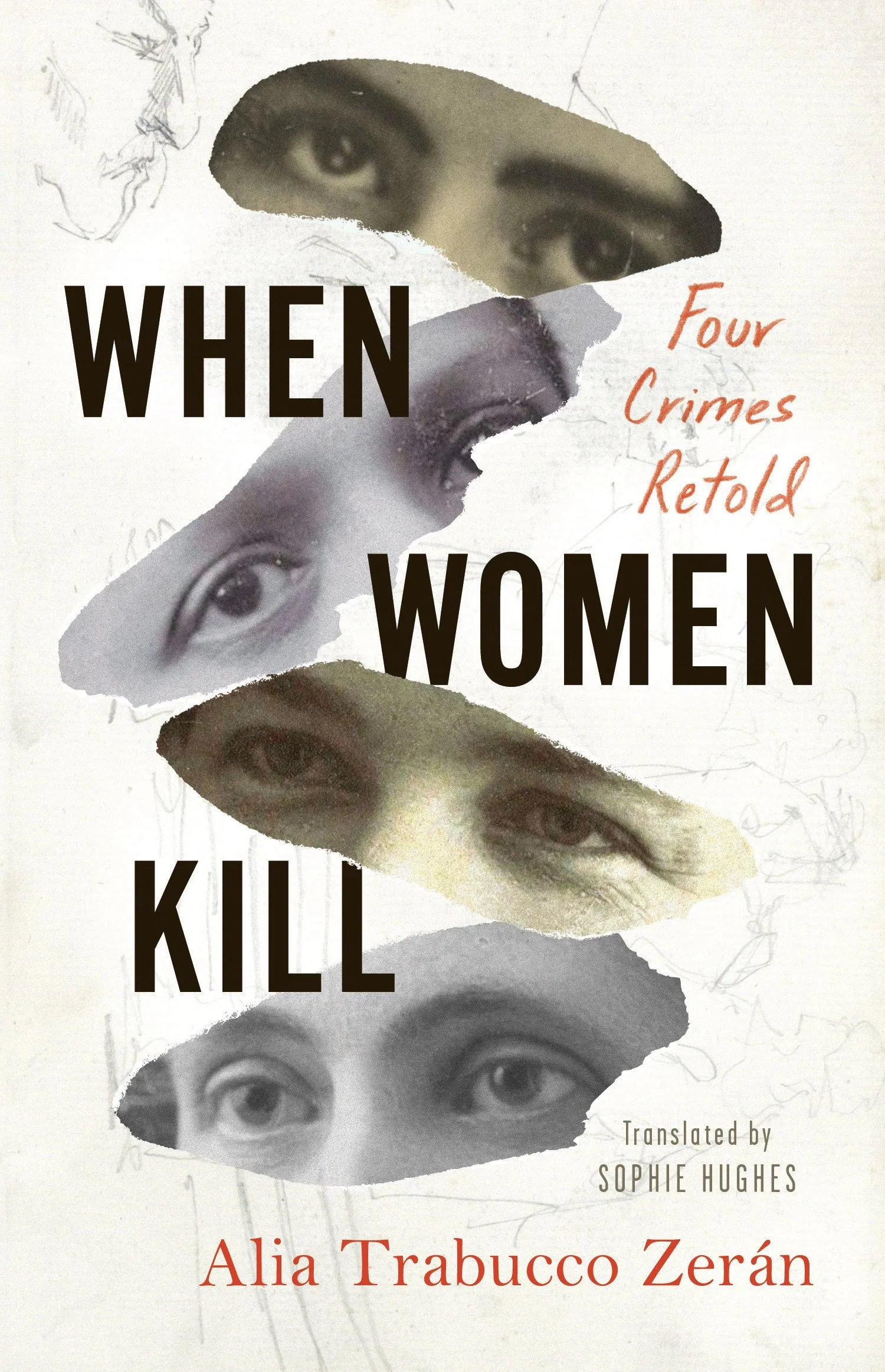
When Women Kill: Four Crimes Retold
Nonfiction by Alia Trabucco Zerán, trans. Sophie Hughes
April 5, 2022 • 5 x 7.75 • 256 pages • 978-1-56689-633-7
A genre-bending feminist account of the lives and crimes of four women who committed the double transgression of murder, violating not only criminal law but also the invisible laws of gender.
When Women Kill: Four Crimes Retold analyzes four homicides carried out by Chilean women over the course of the twentieth century. Drawing on her training as a lawyer, Alia Trabucco Zerán offers a nuanced close reading of their lives and crimes, foregoing sensationalism in order to dissect how all four were both perpetrators of violent acts and victims of another, more insidious kind of violence. This radical retelling challenges the archetype of the woman murderer and reveals another narrative, one as disturbing and provocative as the transgressions themselves: What makes women lash out against the restraints of gendered domesticity, and how do we—readers, viewers, the media, the art world, the political establishment—treat them when they do?
Expertly intertwining true crime, critical essay, and research diary, International Booker Prize finalist Alia Trabucco Zerán (The Remainder), in a translation by Sophie Hughes, brings an overdue feminist perspective to the study of deviant women.
About the Author
Alia Trabucco Zerán was born in Chile in 1983. She was awarded a Fulbright scholarship for a master’s in creative writing in Spanish at New York University, where she wrote her debut novel La resta (The Remainder). La resta won the prize for Best Unpublished Literary Work awarded by the Consejo Nacional del Libro de Chile, and was shortlisted for the Man Booker International in 2019. It has been translated into seven languages. Las homicidas is her second book. She lives between Santiago and London.
About the Translator
Sophie Hughes is a British translator of Spanish-language writers such as Alia Trabucco Zerán, Fernanda Melchor, and Enrique Vila-Matas. She has been nominated three times for the International Booker Prize, as well as for the Dublin Literary Award, the Valle Inclán Translation Prize, the National Book Award in Translation, the PEN Translation Prize, the National Translation Award in Prose, and the Andrew Carnegie Medal for Excellence in Fiction.
Praise for When Women Kill
Winner of the 2022 British Academy Book Prize for Global Cultural Understanding
Finalist for the 2022 National Book Critics Circle Award in Criticism
The New York Times, “New Books in Translation”
The New York Times, “6 New True Crime Books”
The Millions, “Most Anticipated”
Book Riot, “24 Must-Read 2022 Books in Translation”
“Using court records, newspaper articles and museum exhibits—which she punctuates with her own whip-smart diary entries—Trabucco Zerán reconstructs each crime scene, backdrop and all.” —Tina Jordan, The New York Times
“Trabucco Zerán, well translated by Sophie Hughes, is a moving, imaginative writer—which is important, given that her four subjects are ‘genuine wrongdoers, proven killers, [and] almost irredeemable beings.’ . . . [When Women Kill] applies a thoughtful feminist lens to stories as painful as they are gory.” —Lily Meyer, NPR
“A highly original and beautifully written work, which uncovers uncomfortable truths about a society and its attitudes to female homicides. This is a timely and important work that invites the reader to reconsider the relationship between gender and violence—not just in Chile but globally. Trabucco Zerán has applied her legal training to the creation of this outstanding book, reminding us that research takes many forms and is not only the preserve of the academic world.” —Judges’ citation, British Academy Book Prize for Global Cultural Understanding
“Throughout, the language is both precise and evocative, and the author’s evaluation of the various circumstances is readable, trenchant, and intersectional. A formally inventive, lyrical, feminist analysis of Chile’s famous female murderers.” —Kirkus, starred review
“By bringing these unexamined tales to light, the hybrid nature of When Women Kill is persuasive in its insistence on looking deeper, echoing the fluctuations in the perceptions of womanhood. . . . Weaving together multiple literary styles and a wide range of voices, When Women Kill constantly remolds and blends genres, culminating in an irresistibly compelling read.” —Suhasini Patni, Asymptote Journal
“Trabucco Zerán’s project is not to endorse their crimes, nor to sensationalize them—she is critical and unsparing in her analysis. Rather, When Women Kill reveals how narratives and cultural systems work in the wake of women’s crimes.” —Morgan Graham, Cleveland Review of Books
“When Women Kill takes on an ambitious series of goals—to recount the stories of four killings, to find connections between all of them, and to show how they relate to a societal progression in Chile. To her credit, she succeeds—and the resulting work is one that true crime buffs and fans of cultural history can appreciate in equal measure.” —Tobias Carroll, Words Without Borders
“A fascinating must-read for all true crime fans, a book that I annotated, starred, dogeared, and just generally obsessed over. . . . Brilliant.” —Leah Rachel von Essen, Book Riot
“In propulsive prose impeccably translated by Sophie Hughes, Trabucco Zerán recounts each case. . . . Like other great books of crime writing, When Women Kill is more about society’s response to violence than the violence itself. Trabucco Zerán doesn’t excuse her killer women, nor does she condemn them. Instead, she explores how, in a sexist society, the reaction to their crimes is all too predictable.” —Henry Hietala, Rain Taxi Review
“A vital and beautifully written book. . . . Equal parts essay, detective story, diary, and feminist discourse, its most moving and brilliant moment may be when Trabucco Zerán dramatizes the only case not yet depicted in art: the portrait of a new Medea, tragic and unsettling, but more than that, transgressive, hungry for another life.” —Giuseppe Caputo
“An outstanding work of archival research. Trabucco Zerán incorporates her diary into her investigation. A smart, rigorous, and necessary book.” —Liliana Colanzi, El País
“This essay turns a stark gaze upon the condition of women in Chile in the last century.” —Nona Fernández
“When Women Kill is a magnificent work of creative nonfiction: provocative, intelligent, and moving. In it, Alia Trabucco Zerán makes use of her talents as a writer and researcher to reconstruct the complex stories of four women accused of violent crimes in the twentieth century. The result is a masterful and pertinent account full of humanity and emotion.” —Fernanda Melchor
“This brilliant essay paints a cogent and unsparing portrait of the rhetorical operations of the patriarchy.” —Lina Meruane
Praise for The Remainder
Kirkus, “Best Fiction of 2019”
Kirkus, “Best Fiction in Translation of 2019”
Shortlisted for the 2019 Man Booker International Prize
Vanity Fair, “Best Books of 2019”
Entropy, “Best of 2019”
“A lyrical evocation of Chile’s lost generation, trying ever more desperately to escape their parents’ political shadow.” —Man Booker International Judges
"This novel is vividly rooted in Chile, yet the quests at its heart—to witness and survive suffering, to put an intractable past to rest—are universally resonant." —Publishers Weekly
“A centrifugal story of death, history, and mathematics . . . a debut that leaves the reader wanting more.” —Kirkus
“You could call The Remainder a literary kaleidoscope: look at it one way and you see how the past lays a crippling hand on the generation that follows political catastrophe; shift the focus and you’re plunged into a darkly comic road trip with a hungover trio in an empty hearse chasing a lost coffin across the Andes cordillera.” —The Spectator
“While writers such as Pedro Lemebel and José Donoso have explored the regime’s impact on those who lived through it, Zerán is concerned with the next generation. Felipe, Iquela and Paloma are the children of ex-militants, attempting to “unremember” the past in Chile’s haunted capital, Santiago.” —TIME
“The second-generation trauma narrative gets a Chilean spin in Zerán’s intense novel of interior monologues, which is Faulknerian in themes, structure, and style.” —Vulture
“A mesmerizing, roaming look at intergenerational trauma, told in a specific and surreal style that shimmers and shifts on the page and in the mind.” —Nylon
“Truly stunning, full of deft turns of phrase. . . . Shines especially bright when unwinding Felipe’s melodic monologues.” —Los Angeles Times
“Deeply compelling.” —The Guardian
“A haunted novel, awash with sinister and elegiac moods. It stands as a testament to the way the past can unsettle us.” —Star Tribune
“Neither the characters nor the narrative ever deal directly with the historic events themselves, but rather with the fallout – the photographs, vocabulary, places and people left behind as remnants. Zerán seamlessly alternates between the voices of Iquela and Felipe, highlighting the opposing and gendered ways they have reacted to the circumstances of their childhood.” —The Times Literary Supplement
“The Remainder controls a remarkable range of registers (it is, by turns, lyrical, elegiac, sensual, funny, tragic). The author, like her characters, is obsessed with words, those ‘cracks in language’ that house our particular ways of understanding things. This novel is sure to endure.” —Edmundo Paz Soldán
“A powerful, impressive novel, dotted with scenes that are as unique as they are unforgettable.” —Lina Meruane
“A fundamental book about what it means to mourn the past, about the remainders of a history that refuses to be forgotten. This is the debut we all wish we had written. A spirited, brave, urgent book, capable of weaving the political and the poetic.” —Carlos Fonseca
Original: $16.95
-65%$16.95
$5.93Product Information
Product Information
Shipping & Returns
Shipping & Returns
Description
Nonfiction by Alia Trabucco Zerán, trans. Sophie Hughes
April 5, 2022 • 5 x 7.75 • 256 pages • 978-1-56689-633-7
A genre-bending feminist account of the lives and crimes of four women who committed the double transgression of murder, violating not only criminal law but also the invisible laws of gender.
When Women Kill: Four Crimes Retold analyzes four homicides carried out by Chilean women over the course of the twentieth century. Drawing on her training as a lawyer, Alia Trabucco Zerán offers a nuanced close reading of their lives and crimes, foregoing sensationalism in order to dissect how all four were both perpetrators of violent acts and victims of another, more insidious kind of violence. This radical retelling challenges the archetype of the woman murderer and reveals another narrative, one as disturbing and provocative as the transgressions themselves: What makes women lash out against the restraints of gendered domesticity, and how do we—readers, viewers, the media, the art world, the political establishment—treat them when they do?
Expertly intertwining true crime, critical essay, and research diary, International Booker Prize finalist Alia Trabucco Zerán (The Remainder), in a translation by Sophie Hughes, brings an overdue feminist perspective to the study of deviant women.
About the Author
Alia Trabucco Zerán was born in Chile in 1983. She was awarded a Fulbright scholarship for a master’s in creative writing in Spanish at New York University, where she wrote her debut novel La resta (The Remainder). La resta won the prize for Best Unpublished Literary Work awarded by the Consejo Nacional del Libro de Chile, and was shortlisted for the Man Booker International in 2019. It has been translated into seven languages. Las homicidas is her second book. She lives between Santiago and London.
About the Translator
Sophie Hughes is a British translator of Spanish-language writers such as Alia Trabucco Zerán, Fernanda Melchor, and Enrique Vila-Matas. She has been nominated three times for the International Booker Prize, as well as for the Dublin Literary Award, the Valle Inclán Translation Prize, the National Book Award in Translation, the PEN Translation Prize, the National Translation Award in Prose, and the Andrew Carnegie Medal for Excellence in Fiction.
Praise for When Women Kill
Winner of the 2022 British Academy Book Prize for Global Cultural Understanding
Finalist for the 2022 National Book Critics Circle Award in Criticism
The New York Times, “New Books in Translation”
The New York Times, “6 New True Crime Books”
The Millions, “Most Anticipated”
Book Riot, “24 Must-Read 2022 Books in Translation”
“Using court records, newspaper articles and museum exhibits—which she punctuates with her own whip-smart diary entries—Trabucco Zerán reconstructs each crime scene, backdrop and all.” —Tina Jordan, The New York Times
“Trabucco Zerán, well translated by Sophie Hughes, is a moving, imaginative writer—which is important, given that her four subjects are ‘genuine wrongdoers, proven killers, [and] almost irredeemable beings.’ . . . [When Women Kill] applies a thoughtful feminist lens to stories as painful as they are gory.” —Lily Meyer, NPR
“A highly original and beautifully written work, which uncovers uncomfortable truths about a society and its attitudes to female homicides. This is a timely and important work that invites the reader to reconsider the relationship between gender and violence—not just in Chile but globally. Trabucco Zerán has applied her legal training to the creation of this outstanding book, reminding us that research takes many forms and is not only the preserve of the academic world.” —Judges’ citation, British Academy Book Prize for Global Cultural Understanding
“Throughout, the language is both precise and evocative, and the author’s evaluation of the various circumstances is readable, trenchant, and intersectional. A formally inventive, lyrical, feminist analysis of Chile’s famous female murderers.” —Kirkus, starred review
“By bringing these unexamined tales to light, the hybrid nature of When Women Kill is persuasive in its insistence on looking deeper, echoing the fluctuations in the perceptions of womanhood. . . . Weaving together multiple literary styles and a wide range of voices, When Women Kill constantly remolds and blends genres, culminating in an irresistibly compelling read.” —Suhasini Patni, Asymptote Journal
“Trabucco Zerán’s project is not to endorse their crimes, nor to sensationalize them—she is critical and unsparing in her analysis. Rather, When Women Kill reveals how narratives and cultural systems work in the wake of women’s crimes.” —Morgan Graham, Cleveland Review of Books
“When Women Kill takes on an ambitious series of goals—to recount the stories of four killings, to find connections between all of them, and to show how they relate to a societal progression in Chile. To her credit, she succeeds—and the resulting work is one that true crime buffs and fans of cultural history can appreciate in equal measure.” —Tobias Carroll, Words Without Borders
“A fascinating must-read for all true crime fans, a book that I annotated, starred, dogeared, and just generally obsessed over. . . . Brilliant.” —Leah Rachel von Essen, Book Riot
“In propulsive prose impeccably translated by Sophie Hughes, Trabucco Zerán recounts each case. . . . Like other great books of crime writing, When Women Kill is more about society’s response to violence than the violence itself. Trabucco Zerán doesn’t excuse her killer women, nor does she condemn them. Instead, she explores how, in a sexist society, the reaction to their crimes is all too predictable.” —Henry Hietala, Rain Taxi Review
“A vital and beautifully written book. . . . Equal parts essay, detective story, diary, and feminist discourse, its most moving and brilliant moment may be when Trabucco Zerán dramatizes the only case not yet depicted in art: the portrait of a new Medea, tragic and unsettling, but more than that, transgressive, hungry for another life.” —Giuseppe Caputo
“An outstanding work of archival research. Trabucco Zerán incorporates her diary into her investigation. A smart, rigorous, and necessary book.” —Liliana Colanzi, El País
“This essay turns a stark gaze upon the condition of women in Chile in the last century.” —Nona Fernández
“When Women Kill is a magnificent work of creative nonfiction: provocative, intelligent, and moving. In it, Alia Trabucco Zerán makes use of her talents as a writer and researcher to reconstruct the complex stories of four women accused of violent crimes in the twentieth century. The result is a masterful and pertinent account full of humanity and emotion.” —Fernanda Melchor
“This brilliant essay paints a cogent and unsparing portrait of the rhetorical operations of the patriarchy.” —Lina Meruane
Praise for The Remainder
Kirkus, “Best Fiction of 2019”
Kirkus, “Best Fiction in Translation of 2019”
Shortlisted for the 2019 Man Booker International Prize
Vanity Fair, “Best Books of 2019”
Entropy, “Best of 2019”
“A lyrical evocation of Chile’s lost generation, trying ever more desperately to escape their parents’ political shadow.” —Man Booker International Judges
"This novel is vividly rooted in Chile, yet the quests at its heart—to witness and survive suffering, to put an intractable past to rest—are universally resonant." —Publishers Weekly
“A centrifugal story of death, history, and mathematics . . . a debut that leaves the reader wanting more.” —Kirkus
“You could call The Remainder a literary kaleidoscope: look at it one way and you see how the past lays a crippling hand on the generation that follows political catastrophe; shift the focus and you’re plunged into a darkly comic road trip with a hungover trio in an empty hearse chasing a lost coffin across the Andes cordillera.” —The Spectator
“While writers such as Pedro Lemebel and José Donoso have explored the regime’s impact on those who lived through it, Zerán is concerned with the next generation. Felipe, Iquela and Paloma are the children of ex-militants, attempting to “unremember” the past in Chile’s haunted capital, Santiago.” —TIME
“The second-generation trauma narrative gets a Chilean spin in Zerán’s intense novel of interior monologues, which is Faulknerian in themes, structure, and style.” —Vulture
“A mesmerizing, roaming look at intergenerational trauma, told in a specific and surreal style that shimmers and shifts on the page and in the mind.” —Nylon
“Truly stunning, full of deft turns of phrase. . . . Shines especially bright when unwinding Felipe’s melodic monologues.” —Los Angeles Times
“Deeply compelling.” —The Guardian
“A haunted novel, awash with sinister and elegiac moods. It stands as a testament to the way the past can unsettle us.” —Star Tribune
“Neither the characters nor the narrative ever deal directly with the historic events themselves, but rather with the fallout – the photographs, vocabulary, places and people left behind as remnants. Zerán seamlessly alternates between the voices of Iquela and Felipe, highlighting the opposing and gendered ways they have reacted to the circumstances of their childhood.” —The Times Literary Supplement
“The Remainder controls a remarkable range of registers (it is, by turns, lyrical, elegiac, sensual, funny, tragic). The author, like her characters, is obsessed with words, those ‘cracks in language’ that house our particular ways of understanding things. This novel is sure to endure.” —Edmundo Paz Soldán
“A powerful, impressive novel, dotted with scenes that are as unique as they are unforgettable.” —Lina Meruane
“A fundamental book about what it means to mourn the past, about the remainders of a history that refuses to be forgotten. This is the debut we all wish we had written. A spirited, brave, urgent book, capable of weaving the political and the poetic.” —Carlos Fonseca