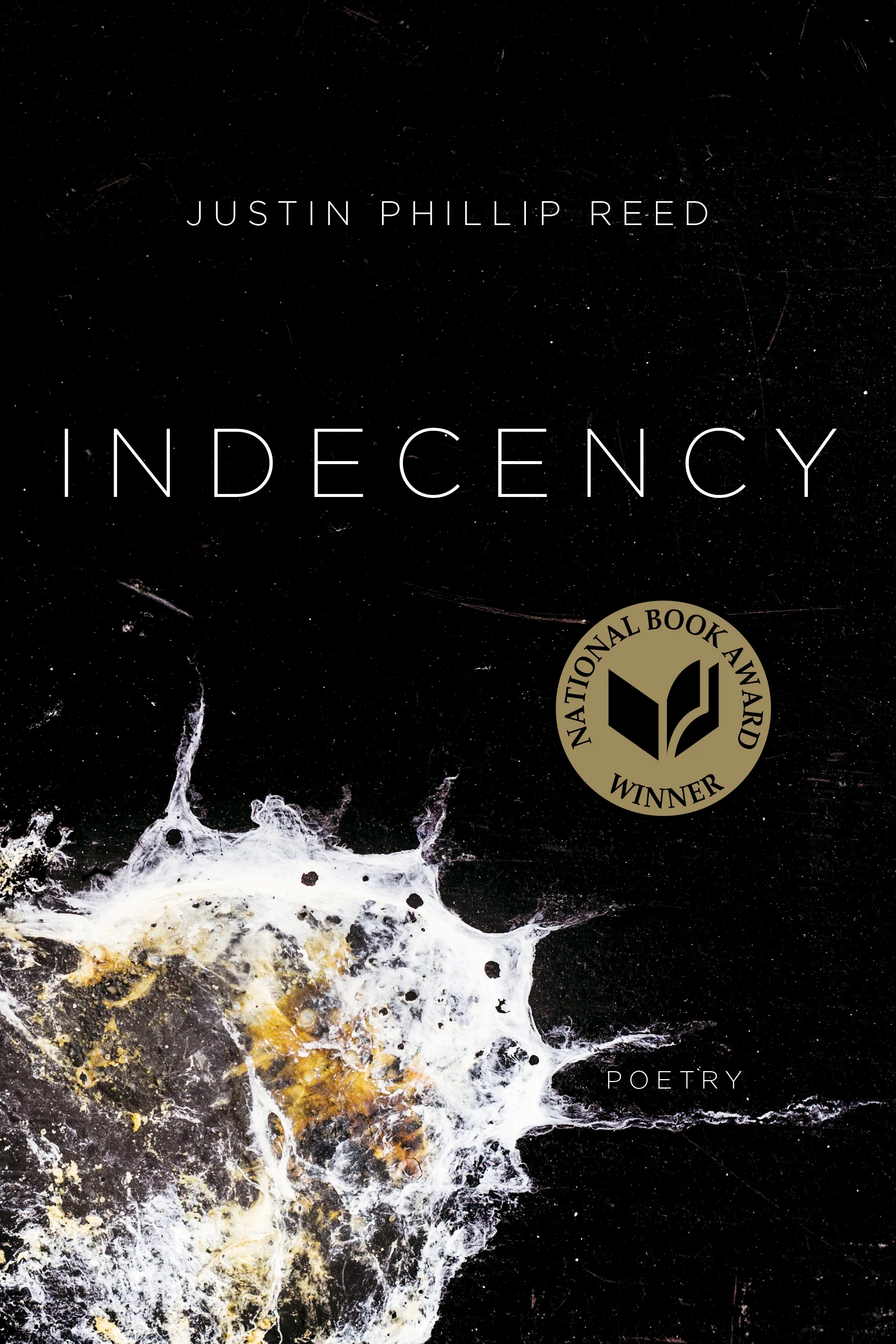
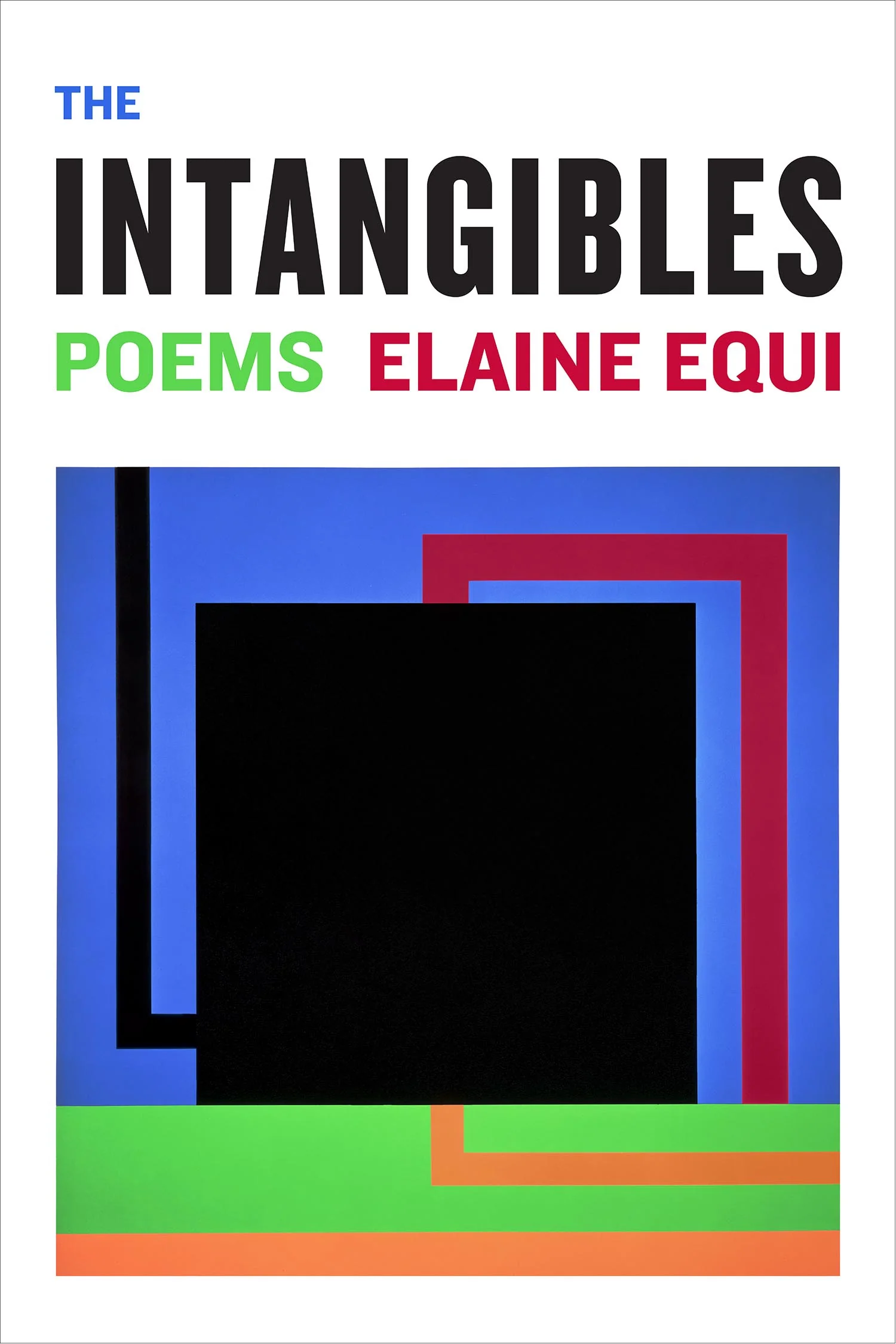
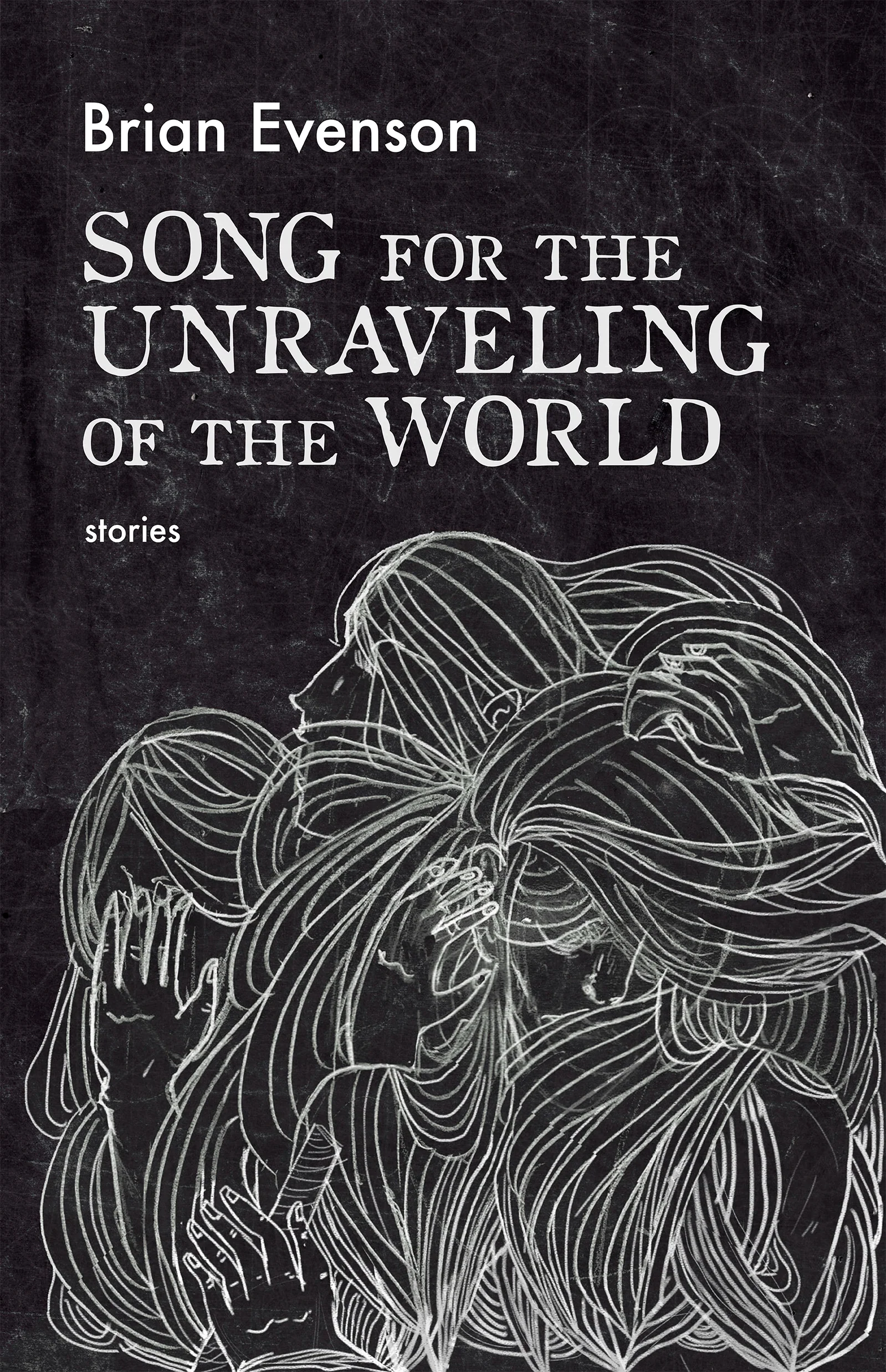
Winner of the 2019 Lambda Literary Award for Transgender Nonfiction
Finalist for the 2019 Big Other Book Award in Nonfiction
“Both provocatively and evocatively written, the book illuminates the process of becoming.” —Kirkus
“A perceptive and compassionate narrative that beautifully breaks with the limits of genre and gender.” —Publishers Weekly
\"Fleischmann is not only staking out but literally inventing a territory of their own.\" —Los Angeles Times
“This is a book about paying attention and sometimes failing to, about showing the ways in which attention, no matter how well focused, can be or feel insufficient. Fleischmann is not wringing their hands but instead leaning into the world, constantly pressing at the corners of language . . . Watchful of its context and position, this book is able to pose increasingly interesting, urgent, and difficult questions. It holds us accountable to the world.” —The Paris Review Daily
“Fleischmann excels at the integration of art and memoir . . . their theory of identity suffuses the book on every level, a framework that shows that the ability to exist in an uninscribed space is an exercise in resilience and progress.” —The Nation
“In the tradition of the prose magicians W.G. Sebald or Ben Lerner (imagine if those two were somehow non-binary and joyfully slutty). . . . I'm of the belief that Fleischmann is, like many great writers, ahead of their time—I will go so far as to bet that in 10 years, another generation of writers will be pointing to Time as one of the most formative books of our era.” —Torrey Peters
“Fleischmann’s path through self-expression, gender fluidity, and self-understanding is well worth our attention.” —Literary Hub
“A meditation on relationships, place, proximity and distance, belonging, community, gender, politics, the body and, well, love, and all the things that can mean, braided with digressive, descriptive passages about the work of Cuban-born American artist Felix Gonzalez-Torres.” —Frieze
“The story of the author's own exploration of queerness and identity, this is an all-too-important book at a time when LGBTQIA+ rights are at risk of regression.” —Bustle
“Meditative, beautiful, and revolutionary.” —Book Riot
“With this book-length essay, T Fleischmann has given us a truly unique work. . . . Poetic, powerful, and subversive.” —Ms. Magazine
“Chicago-based writer T Fleischmann melds personal narrative and art criticism in a poetically titled, genre-defying work. Mining the interactive art of Felix Gonzalez-Torres, this book-length essay explores power, desire, gender fluidity and subverting limitations.” —Chicago Tribune
“Fleischmann combines serious engagement with warmth and clarity of prose, reveling in the experiences and pleasures of art and the body, identity and community.” —The Rumpus
“It is this spirit of generosity that makes Fleischmann’s book so luminous—a generosity towards the queer body and its existence, a generosity towards the work of activism, a recognition both of the work that needs to be done and the work that is being done.” —Longreads
“The long, sprawling essay bends prose and language to seek both intimacy and the alive body.” —The Brooklyn Rail
“Expansive. . . . Fleischmann's stories transcend the singular, giving the reader space to reflect on their own body, their own art.” —Columbia Journal
“Interspersing frank personal narrative with lyrical, line-broken passages from an unfinished meditation on Felix Gonzalez-Torres, Fleischmann offers up pearls, pills, candies, and miniature portraits of their friends and lovers in acts of generosity that are self-questioning but never self-doubting. Rather, it’s the notion of a unified self itself that splits and spills across these pages with honesty, empathy, and often stunning delicacy.” —Barbara Browning
“By turns blunt, confrontational, eloquent, exciting, original, and somewhat indescribable.” —The Gay & Lesbian Review
“T Fleischmann's new book explores art and relationships with a perceptive eye and beautiful prose.” —Star Tribune
“Fleischmann blends their own experiences with the art of Felix González-Torres to meditate on loss, violence, love and gender.” —Chicago Tribune
“Fleischmann’s book is also generous in its refusal to wrap up or resolve, leaving a wealth of inquiries to be pursued, an endless supply of thoughts feeding thoughts.” —The Arkansas International
“What Fleischmann finds here are possibilities for making and living away from the ‘reification of identity’ through González-Torres’s art, searching out what the artist had described as ‘the uninscribed.’” —The Expanded Field
“To eat the candy; it’s candy from “Untitled” (Portrait of Ross in L.A.), Felix Gonzalez-Torres’s ‘spill’ of wrapped sweets selected and arranged by the curator of the art museum in which it is displayed. In Time Is the Thing a Body Moves Through, this moment is protracted. It becomes both duration, the thing that varies time or stops it, and also a block of sensations that might be received by the reader and discharged by their own capacity to taste it too: ‘The candy was very sweet, and it was melting.’ T Fleischmann has written a book like this, one that is ‘spilled and gestured’ between radical others of many kinds. Is this love? Is this ‘the only chance to make of it an object’? Is this what it’s like to be here at all? To write ‘all words of life.’ And how intimate that is. A form of social privacy. Fleischmann: ‘But maybe that’s okay. Even when imagining takes us away, it still begins with what’s already here.’ Yes. It feels like that. It does.” —Bhanu Kapil
Praise for T Fleischmann
“How to describe the indescribable might as well be the title of this blurb, if we titled blurbs, since like any good essay, cowgirl, or wandering ghost, T Fleischmann’s Syzygy, Beauty is electric and resists being fenced in. Sometimes solid, sometimes not, like magma or the household magic of corn starch and water, Fleischmann works and perforates the spaces between body and nobody; desire, declaration, and dream; whiskey, sex, and subjectivity; art, ecstasy, and surface tension. Spectral and spectacular, Syzygy, Beauty will haunt you in a way you’ll remember.” —Ander Monson
“T Fleischmann’s Syzygy, Beauty shimmers with confidence as it tours the surreal chaos of gender, art, and desire. Its declarative sentences—seductive, abject, caustic, moving, informative, and utterly inventive—herald a new world, one in which we are blessedly ‘here with outfits like strings of light and no future.’ I hail its weirdness, its ‘armpit frankess,’ its indelible portrait of occulted relation, and above all, its impeccable music.” —Maggie Nelson
“Let me say first that T Fleischmann’s writing helps us see ourselves. Helping us see clearer what has been muddled in our lives is marvelous, and is the best possible endowment of strength. What better substance? Gluing fur to logic’ as T writes. ‘There is imagination in truth,’ and while T brands this an essay I sense it as poetry because I live through poetry. Whatever you call it, you too will be transfigured. Those who say reading a book changes nothing have been wasting their time reading the wrong things. Do you also know someone who says so? Send them this one.” —CA Conrad, author of The Book of Frank
“A complex, tightly wound (and wounded) cri de coeur that is simultaneously accessible and intensely, cryptically personal.” —Star Tribune
“In Syzygy, Beauty, T Fleischmann re-imagines the essay, creating a spare little book that reads like a collection of prose poems. Moving between anecdote and observation, fantasy and memory, it traces the story of a relationship—or does it? For Fleischmann, ambiguity is the point, and the more we read, the more the lines here blur. ‘By describing something,’ [they write], ‘we place it at a distance.’” —Los Angeles Times
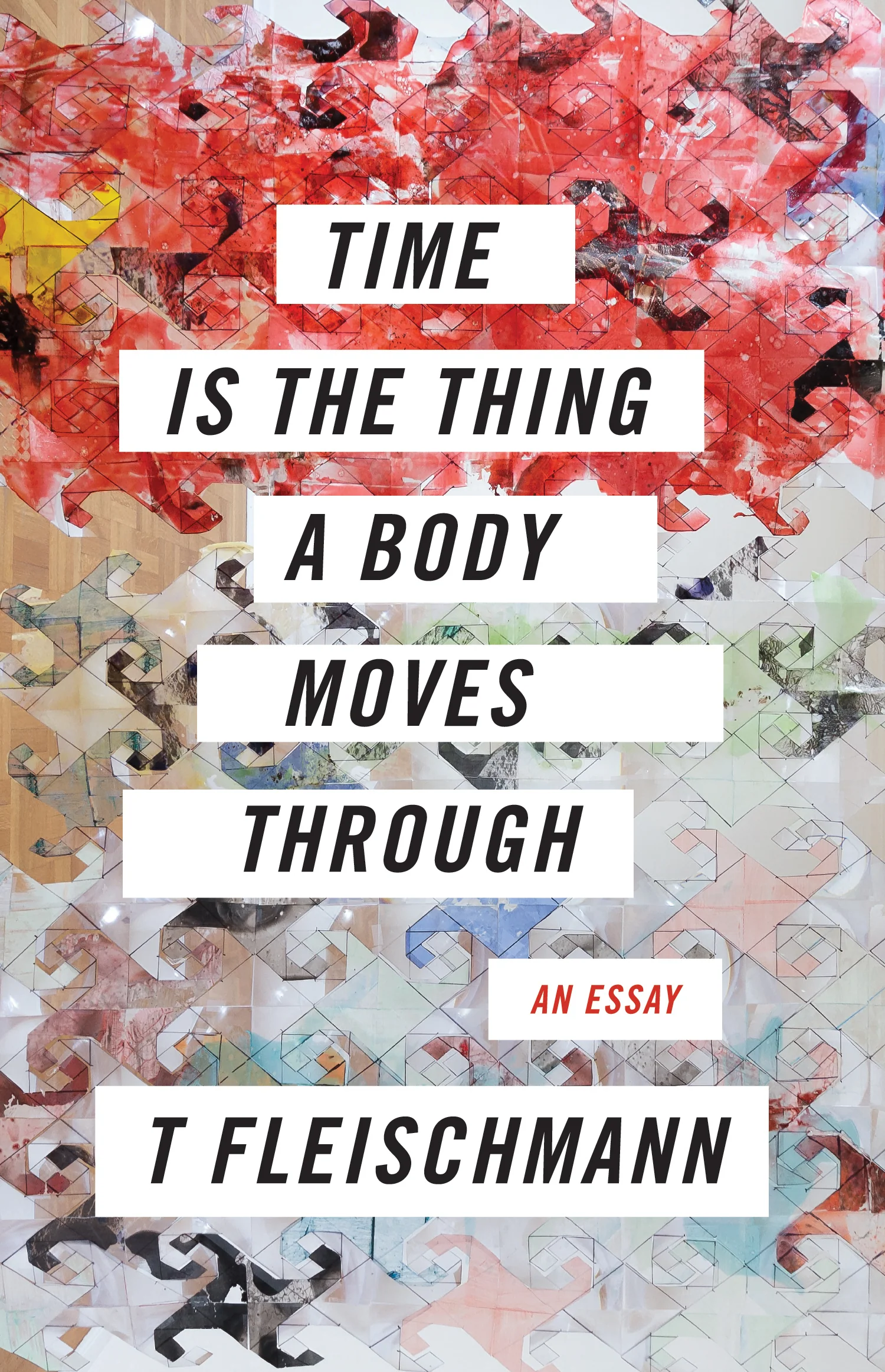
Time Is the Thing a Body Moves Through
An essay by T Fleischmann
June 4, 2019 • 5 x 7.75 • 176 pages • 978-1-56689-547-7
W.G. Sebald meets Maggie Nelson in an autobiographical narrative of embodiment, visual art, history, and loss.
How do the bodies we inhabit affect our relationship with art? How does art affect our relationship to our bodies? T Fleischmann uses Felix Gonzalez-Torres’s artworks—piles of candy, stacks of paper, puzzles—as a path through questions of love and loss, violence and rejuvenation, gender and sexuality. From the back porches of Buffalo, to the galleries of New York and L.A., to farmhouses of rural Tennessee, the artworks act as still points, sites for reflection situated in lived experience. Fleischmann combines serious engagement with warmth and clarity of prose, reveling in the experiences and pleasures of art and the body, identity and community.
About the Author
T Fleischmann is the author of Syzygy, Beauty and the curator of Body Forms: Queerness and the Essay. A nonfiction editor at DIAGRAM and contributing editor at Essay Daily, they have published critical and creative work in journals such as the Los Angeles Review of Books, Fourth Genre, Gulf Coast, and others, as well as in the anthologies Bending Genre, How We Speak to One Another, Little Boxes, and Feminisms in Motion.
Praise for Time Is the Thing a Body Moves Through
Winner of the 2019 Lambda Literary Award for Transgender Nonfiction
Finalist for the 2019 Big Other Book Award in Nonfiction
“Both provocatively and evocatively written, the book illuminates the process of becoming.” —Kirkus
“A perceptive and compassionate narrative that beautifully breaks with the limits of genre and gender.” —Publishers Weekly
"Fleischmann is not only staking out but literally inventing a territory of their own." —Los Angeles Times
“This is a book about paying attention and sometimes failing to, about showing the ways in which attention, no matter how well focused, can be or feel insufficient. Fleischmann is not wringing their hands but instead leaning into the world, constantly pressing at the corners of language . . . Watchful of its context and position, this book is able to pose increasingly interesting, urgent, and difficult questions. It holds us accountable to the world.” —The Paris Review Daily
“Fleischmann excels at the integration of art and memoir . . . their theory of identity suffuses the book on every level, a framework that shows that the ability to exist in an uninscribed space is an exercise in resilience and progress.” —The Nation
“In the tradition of the prose magicians W.G. Sebald or Ben Lerner (imagine if those two were somehow non-binary and joyfully slutty). . . . I'm of the belief that Fleischmann is, like many great writers, ahead of their time—I will go so far as to bet that in 10 years, another generation of writers will be pointing to Time as one of the most formative books of our era.” —Torrey Peters
“Fleischmann’s path through self-expression, gender fluidity, and self-understanding is well worth our attention.” —Literary Hub
“A meditation on relationships, place, proximity and distance, belonging, community, gender, politics, the body and, well, love, and all the things that can mean, braided with digressive, descriptive passages about the work of Cuban-born American artist Felix Gonzalez-Torres.” —Frieze
“The story of the author's own exploration of queerness and identity, this is an all-too-important book at a time when LGBTQIA+ rights are at risk of regression.” —Bustle
“Meditative, beautiful, and revolutionary.” —Book Riot
“With this book-length essay, T Fleischmann has given us a truly unique work. . . . Poetic, powerful, and subversive.” —Ms. Magazine
“Chicago-based writer T Fleischmann melds personal narrative and art criticism in a poetically titled, genre-defying work. Mining the interactive art of Felix Gonzalez-Torres, this book-length essay explores power, desire, gender fluidity and subverting limitations.” —Chicago Tribune
“Fleischmann combines serious engagement with warmth and clarity of prose, reveling in the experiences and pleasures of art and the body, identity and community.” —The Rumpus
“It is this spirit of generosity that makes Fleischmann’s book so luminous—a generosity towards the queer body and its existence, a generosity towards the work of activism, a recognition both of the work that needs to be done and the work that is being done.” —Longreads
“The long, sprawling essay bends prose and language to seek both intimacy and the alive body.” —The Brooklyn Rail
“Expansive. . . . Fleischmann's stories transcend the singular, giving the reader space to reflect on their own body, their own art.” —Columbia Journal
“Interspersing frank personal narrative with lyrical, line-broken passages from an unfinished meditation on Felix Gonzalez-Torres, Fleischmann offers up pearls, pills, candies, and miniature portraits of their friends and lovers in acts of generosity that are self-questioning but never self-doubting. Rather, it’s the notion of a unified self itself that splits and spills across these pages with honesty, empathy, and often stunning delicacy.” —Barbara Browning
“By turns blunt, confrontational, eloquent, exciting, original, and somewhat indescribable.” —The Gay & Lesbian Review
“T Fleischmann's new book explores art and relationships with a perceptive eye and beautiful prose.” —Star Tribune
“Fleischmann blends their own experiences with the art of Felix González-Torres to meditate on loss, violence, love and gender.” —Chicago Tribune
“Fleischmann’s book is also generous in its refusal to wrap up or resolve, leaving a wealth of inquiries to be pursued, an endless supply of thoughts feeding thoughts.” —The Arkansas International
“What Fleischmann finds here are possibilities for making and living away from the ‘reification of identity’ through González-Torres’s art, searching out what the artist had described as ‘the uninscribed.’” —The Expanded Field
“To eat the candy; it’s candy from “Untitled” (Portrait of Ross in L.A.), Felix Gonzalez-Torres’s ‘spill’ of wrapped sweets selected and arranged by the curator of the art museum in which it is displayed. In Time Is the Thing a Body Moves Through, this moment is protracted. It becomes both duration, the thing that varies time or stops it, and also a block of sensations that might be received by the reader and discharged by their own capacity to taste it too: ‘The candy was very sweet, and it was melting.’ T Fleischmann has written a book like this, one that is ‘spilled and gestured’ between radical others of many kinds. Is this love? Is this ‘the only chance to make of it an object’? Is this what it’s like to be here at all? To write ‘all words of life.’ And how intimate that is. A form of social privacy. Fleischmann: ‘But maybe that’s okay. Even when imagining takes us away, it still begins with what’s already here.’ Yes. It feels like that. It does.” —Bhanu Kapil
Praise for T Fleischmann
“How to describe the indescribable might as well be the title of this blurb, if we titled blurbs, since like any good essay, cowgirl, or wandering ghost, T Fleischmann’s Syzygy, Beauty is electric and resists being fenced in. Sometimes solid, sometimes not, like magma or the household magic of corn starch and water, Fleischmann works and perforates the spaces between body and nobody; desire, declaration, and dream; whiskey, sex, and subjectivity; art, ecstasy, and surface tension. Spectral and spectacular, Syzygy, Beauty will haunt you in a way you’ll remember.” —Ander Monson
“T Fleischmann’s Syzygy, Beauty shimmers with confidence as it tours the surreal chaos of gender, art, and desire. Its declarative sentences—seductive, abject, caustic, moving, informative, and utterly inventive—herald a new world, one in which we are blessedly ‘here with outfits like strings of light and no future.’ I hail its weirdness, its ‘armpit frankess,’ its indelible portrait of occulted relation, and above all, its impeccable music.” —Maggie Nelson
“Let me say first that T Fleischmann’s writing helps us see ourselves. Helping us see clearer what has been muddled in our lives is marvelous, and is the best possible endowment of strength. What better substance? Gluing fur to logic’ as T writes. ‘There is imagination in truth,’ and while T brands this an essay I sense it as poetry because I live through poetry. Whatever you call it, you too will be transfigured. Those who say reading a book changes nothing have been wasting their time reading the wrong things. Do you also know someone who says so? Send them this one.” —CA Conrad, author of The Book of Frank
“A complex, tightly wound (and wounded) cri de coeur that is simultaneously accessible and intensely, cryptically personal.” —Star Tribune
“In Syzygy, Beauty, T Fleischmann re-imagines the essay, creating a spare little book that reads like a collection of prose poems. Moving between anecdote and observation, fantasy and memory, it traces the story of a relationship—or does it? For Fleischmann, ambiguity is the point, and the more we read, the more the lines here blur. ‘By describing something,’ [they write], ‘we place it at a distance.’” —Los Angeles Times
Original: $16.95
-65%$16.95
$5.93Product Information
Product Information
Shipping & Returns
Shipping & Returns
Description
An essay by T Fleischmann
June 4, 2019 • 5 x 7.75 • 176 pages • 978-1-56689-547-7
W.G. Sebald meets Maggie Nelson in an autobiographical narrative of embodiment, visual art, history, and loss.
How do the bodies we inhabit affect our relationship with art? How does art affect our relationship to our bodies? T Fleischmann uses Felix Gonzalez-Torres’s artworks—piles of candy, stacks of paper, puzzles—as a path through questions of love and loss, violence and rejuvenation, gender and sexuality. From the back porches of Buffalo, to the galleries of New York and L.A., to farmhouses of rural Tennessee, the artworks act as still points, sites for reflection situated in lived experience. Fleischmann combines serious engagement with warmth and clarity of prose, reveling in the experiences and pleasures of art and the body, identity and community.
About the Author
T Fleischmann is the author of Syzygy, Beauty and the curator of Body Forms: Queerness and the Essay. A nonfiction editor at DIAGRAM and contributing editor at Essay Daily, they have published critical and creative work in journals such as the Los Angeles Review of Books, Fourth Genre, Gulf Coast, and others, as well as in the anthologies Bending Genre, How We Speak to One Another, Little Boxes, and Feminisms in Motion.
Praise for Time Is the Thing a Body Moves Through
Winner of the 2019 Lambda Literary Award for Transgender Nonfiction
Finalist for the 2019 Big Other Book Award in Nonfiction
“Both provocatively and evocatively written, the book illuminates the process of becoming.” —Kirkus
“A perceptive and compassionate narrative that beautifully breaks with the limits of genre and gender.” —Publishers Weekly
"Fleischmann is not only staking out but literally inventing a territory of their own." —Los Angeles Times
“This is a book about paying attention and sometimes failing to, about showing the ways in which attention, no matter how well focused, can be or feel insufficient. Fleischmann is not wringing their hands but instead leaning into the world, constantly pressing at the corners of language . . . Watchful of its context and position, this book is able to pose increasingly interesting, urgent, and difficult questions. It holds us accountable to the world.” —The Paris Review Daily
“Fleischmann excels at the integration of art and memoir . . . their theory of identity suffuses the book on every level, a framework that shows that the ability to exist in an uninscribed space is an exercise in resilience and progress.” —The Nation
“In the tradition of the prose magicians W.G. Sebald or Ben Lerner (imagine if those two were somehow non-binary and joyfully slutty). . . . I'm of the belief that Fleischmann is, like many great writers, ahead of their time—I will go so far as to bet that in 10 years, another generation of writers will be pointing to Time as one of the most formative books of our era.” —Torrey Peters
“Fleischmann’s path through self-expression, gender fluidity, and self-understanding is well worth our attention.” —Literary Hub
“A meditation on relationships, place, proximity and distance, belonging, community, gender, politics, the body and, well, love, and all the things that can mean, braided with digressive, descriptive passages about the work of Cuban-born American artist Felix Gonzalez-Torres.” —Frieze
“The story of the author's own exploration of queerness and identity, this is an all-too-important book at a time when LGBTQIA+ rights are at risk of regression.” —Bustle
“Meditative, beautiful, and revolutionary.” —Book Riot
“With this book-length essay, T Fleischmann has given us a truly unique work. . . . Poetic, powerful, and subversive.” —Ms. Magazine
“Chicago-based writer T Fleischmann melds personal narrative and art criticism in a poetically titled, genre-defying work. Mining the interactive art of Felix Gonzalez-Torres, this book-length essay explores power, desire, gender fluidity and subverting limitations.” —Chicago Tribune
“Fleischmann combines serious engagement with warmth and clarity of prose, reveling in the experiences and pleasures of art and the body, identity and community.” —The Rumpus
“It is this spirit of generosity that makes Fleischmann’s book so luminous—a generosity towards the queer body and its existence, a generosity towards the work of activism, a recognition both of the work that needs to be done and the work that is being done.” —Longreads
“The long, sprawling essay bends prose and language to seek both intimacy and the alive body.” —The Brooklyn Rail
“Expansive. . . . Fleischmann's stories transcend the singular, giving the reader space to reflect on their own body, their own art.” —Columbia Journal
“Interspersing frank personal narrative with lyrical, line-broken passages from an unfinished meditation on Felix Gonzalez-Torres, Fleischmann offers up pearls, pills, candies, and miniature portraits of their friends and lovers in acts of generosity that are self-questioning but never self-doubting. Rather, it’s the notion of a unified self itself that splits and spills across these pages with honesty, empathy, and often stunning delicacy.” —Barbara Browning
“By turns blunt, confrontational, eloquent, exciting, original, and somewhat indescribable.” —The Gay & Lesbian Review
“T Fleischmann's new book explores art and relationships with a perceptive eye and beautiful prose.” —Star Tribune
“Fleischmann blends their own experiences with the art of Felix González-Torres to meditate on loss, violence, love and gender.” —Chicago Tribune
“Fleischmann’s book is also generous in its refusal to wrap up or resolve, leaving a wealth of inquiries to be pursued, an endless supply of thoughts feeding thoughts.” —The Arkansas International
“What Fleischmann finds here are possibilities for making and living away from the ‘reification of identity’ through González-Torres’s art, searching out what the artist had described as ‘the uninscribed.’” —The Expanded Field
“To eat the candy; it’s candy from “Untitled” (Portrait of Ross in L.A.), Felix Gonzalez-Torres’s ‘spill’ of wrapped sweets selected and arranged by the curator of the art museum in which it is displayed. In Time Is the Thing a Body Moves Through, this moment is protracted. It becomes both duration, the thing that varies time or stops it, and also a block of sensations that might be received by the reader and discharged by their own capacity to taste it too: ‘The candy was very sweet, and it was melting.’ T Fleischmann has written a book like this, one that is ‘spilled and gestured’ between radical others of many kinds. Is this love? Is this ‘the only chance to make of it an object’? Is this what it’s like to be here at all? To write ‘all words of life.’ And how intimate that is. A form of social privacy. Fleischmann: ‘But maybe that’s okay. Even when imagining takes us away, it still begins with what’s already here.’ Yes. It feels like that. It does.” —Bhanu Kapil
Praise for T Fleischmann
“How to describe the indescribable might as well be the title of this blurb, if we titled blurbs, since like any good essay, cowgirl, or wandering ghost, T Fleischmann’s Syzygy, Beauty is electric and resists being fenced in. Sometimes solid, sometimes not, like magma or the household magic of corn starch and water, Fleischmann works and perforates the spaces between body and nobody; desire, declaration, and dream; whiskey, sex, and subjectivity; art, ecstasy, and surface tension. Spectral and spectacular, Syzygy, Beauty will haunt you in a way you’ll remember.” —Ander Monson
“T Fleischmann’s Syzygy, Beauty shimmers with confidence as it tours the surreal chaos of gender, art, and desire. Its declarative sentences—seductive, abject, caustic, moving, informative, and utterly inventive—herald a new world, one in which we are blessedly ‘here with outfits like strings of light and no future.’ I hail its weirdness, its ‘armpit frankess,’ its indelible portrait of occulted relation, and above all, its impeccable music.” —Maggie Nelson
“Let me say first that T Fleischmann’s writing helps us see ourselves. Helping us see clearer what has been muddled in our lives is marvelous, and is the best possible endowment of strength. What better substance? Gluing fur to logic’ as T writes. ‘There is imagination in truth,’ and while T brands this an essay I sense it as poetry because I live through poetry. Whatever you call it, you too will be transfigured. Those who say reading a book changes nothing have been wasting their time reading the wrong things. Do you also know someone who says so? Send them this one.” —CA Conrad, author of The Book of Frank
“A complex, tightly wound (and wounded) cri de coeur that is simultaneously accessible and intensely, cryptically personal.” —Star Tribune
“In Syzygy, Beauty, T Fleischmann re-imagines the essay, creating a spare little book that reads like a collection of prose poems. Moving between anecdote and observation, fantasy and memory, it traces the story of a relationship—or does it? For Fleischmann, ambiguity is the point, and the more we read, the more the lines here blur. ‘By describing something,’ [they write], ‘we place it at a distance.’” —Los Angeles Times